

At the exam, the point where my patients hesitate most when deciding on orthodontic treatment is usually "clear aligners or braces?" Both are used to move teeth into their target position, but they affect your daily life, care routine, and the discipline treatment requires quite differently.
In this article, I explain the differences between the two methods — from how they work, to daily use, to care, to which cases might suit which method better. Which one is right for you can only be determined after an exam and an assessment of your tooth and jaw structure.
Key Takeaways
- Both methods apply controlled force to move teeth into their target position over time; the key difference is how that force is applied and how much daily discipline it requires.
- Because clear aligners are removable, they need to be worn at least 22 hours a day — this discipline directly affects how well treatment works.
- Braces are fixed, so they depend less on patient discipline, but they require avoiding hard/sticky foods and a more careful brushing technique.
- For significantly complex tooth or jaw irregularities, braces generally have a broader scope; clear aligners can deliver strong results for mild-to-moderate cases.
- Which one suits you is determined at the exam, based on the severity of your misalignment and your daily routine.
Both Serve the Same Purpose: Moving Teeth in a Controlled Way
Braces and clear aligners use different tools to apply the same biological principle: when a continuous, controlled force is applied to teeth, they gradually move to a new position within the jawbone. The difference lies in how that force is applied.
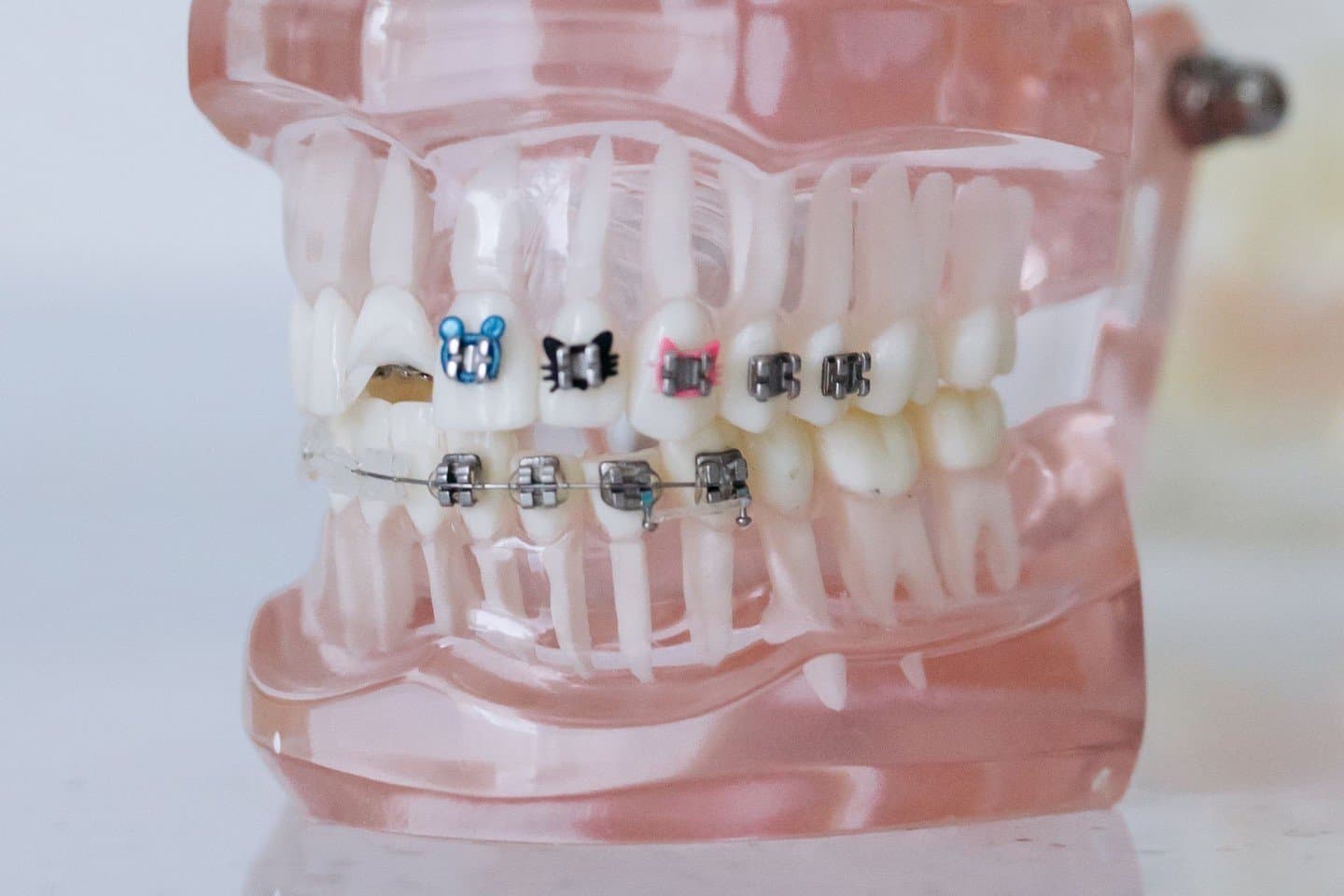
Braces use brackets bonded to the teeth, connected by wires; the wires are adjusted at periodic checkups to update the force. Clear aligner treatment, on the other hand, uses a series of clear trays planned through digital scanning and swapped out at set intervals to move teeth gradually — each new tray targets a slightly different position than the one before it.
Visibility and Aesthetic Difference
One of the main reasons patients prefer clear aligners is that they're less noticeable — since they're made of clear material, they're harder to spot in daily life compared to braces. With braces, brackets can be metal or tooth-colored; metal brackets are more visible, but some patients still prefer them (for example, because they offer broader movement control in complex cases).
Aesthetic concerns, especially for adult patients, are a common reason for preference, but they shouldn't be the only deciding factor — whether a method can deliver an adequate result for your tooth structure is something that needs to be assessed before your aesthetic preference.
Removability: The Flexibility and Responsibility That Comes With Clear Aligners
The fact that clear aligners are removable is both their biggest advantage and their biggest responsibility. According to the American Association of Orthodontists (AAO), aligners need to be worn in the correct sequence and for at least 22 hours a day. If that time isn't met, the planned tooth movement can be delayed or the expected result may not be achieved.
Being removable also carries a practical risk: an aligner can be forgotten, lost, or damaged after being taken out for a meal. Braces don't carry this risk — the system stays fixed in the mouth throughout treatment, which means the process depends less on patient discipline. However, this fixed nature requires a different kind of attention when it comes to diet and cleaning, which I cover in the next section.
Differences in Oral Hygiene and Care
With braces, careful brushing and flossing around the brackets and wires is needed to prevent plaque buildup. According to the ADA (American Dental Association), avoiding sugary foods and keeping up with regular care is important, since plaque that builds up around brackets can cause permanent staining or damage to teeth.
With clear aligner treatment, since the trays are removed for meals, teeth can be brushed and flossed normally — there's no difficulty navigating around brackets. However, the aligner itself also needs to be cleaned regularly; otherwise, plaque that builds up on the aligner can have a negative effect where it contacts the tooth surface.
Impact on Diet and Daily Life
With braces, it's recommended to avoid hard, sticky, or very hard/crunchy foods (popcorn, hard candy, whole fruits like apples that you bite into) — these can damage the brackets and wires. Carbonated or sugary drinks should also be limited, since they can damage tooth enamel.
With clear aligner treatment, since the tray is removed for meals, there's no such dietary restriction. However, as the AAO notes, liquids like soft drinks, flavored water, or sports drinks shouldn't be consumed while the aligner is in — these liquids can seep inside the aligner and stay in contact with the teeth. In practice, this can be summarized as "only drink water while the aligner is in."
Which Cases Might Suit Which Method Better?
For mild-to-moderate crowding or spacing issues, both methods are options worth considering. For significantly complex tooth or jaw alignment issues, braces generally offer broader movement control thanks to their fixed structure.
This doesn't mean clear aligners are a "weaker" method — they can deliver strong results in the right case. But which method will be adequate for your particular tooth and jaw structure isn't a general rule; it's determined through an oral exam and, if needed, an X-ray assessment.
General Comparison
A brief comparison of the two methods:
| Feature | Braces | Clear Aligners |
|---|---|---|
| Visibility | More noticeable (metal or tooth-colored brackets) | Less noticeable due to clear material |
| Removability | Fixed, cannot be removed | Removable, must be worn at least 22 hours a day |
| Dietary restrictions | Avoid hard/sticky foods | Removed for meals, no restrictions |
| Cleaning | Requires careful brushing around brackets/wires | Teeth brushed normally, aligner cleaned separately |
| Patient discipline | Less dependent (fixed system) | Highly dependent (must stick to daily wear time) |
| Case scope | Generally broader for complex cases | Can deliver strong results for mild-to-moderate cases |
Checkup Frequency and Treatment Monitoring
Both methods require regular checkup appointments. With braces, wires are adjusted at checkups, and rubber bands or other attachments are replaced as needed. With clear aligners, checkups assess whether treatment is progressing as planned and guide the transition to the next trays if needed.
How often checkups happen varies depending on the system used and the complexity of the case; the exact interval becomes clear once the treatment plan is created.
Why Treatment Duration Varies From Person to Person
Treatment duration depends on the severity of the crowding or spacing to be corrected, the patient's age, and — especially with clear aligners — whether the trays are worn consistently for the recommended time. Because of this, it's more useful to understand the factors that affect duration than to give a general "average" figure.
With clear aligner treatment, not meeting the recommended 22-hour daily wear time can extend the planned duration. With braces, duration depends largely on the complexity of the tooth/jaw structure and on keeping up with checkup appointments.
Getting Used to the Comfort Level
With both methods, a mild pressure sensation is normal when starting treatment or moving to a new stage (when wires are tightened or a new aligner is put in). With braces, the contact between the brackets/wires and the soft tissue inside the mouth can cause mild irritation at first; your dentist may recommend protective orthodontic wax for this.
With clear aligners, switching to a new tray can cause a pressure sensation in the teeth that lasts a few days; this is a sign that the aligner is beginning to guide the teeth toward the next target position, and it usually eases quickly.
Common Misconceptions About Clear Aligners and Braces
A misconception I hear often from patients is that "clear aligners always give faster results." In reality, duration depends largely on the severity of the misalignment and, with clear aligners, on how consistently they're worn — not on the method itself.
Another common misconception is that "braces are outdated, clear aligners are superior in every way." In reality, both methods offer different advantages; which one is "better" depends on the case. The AAO makes this same point, noting that which method is appropriate should be decided through a dentist's clinical judgment rather than a general rule.
Questions You Might Ask at the Exam
Some questions worth asking at your orthodontic exam to clarify which method suits you:
- Given the severity of my misalignment, which method is more suitable?
- Considering my daily routine (work, social life, sports), which one would be more practical for me?
- What happens if I can't wear the clear aligner for the recommended time?
- Roughly how long will treatment take, and what factors could affect that?
- How does the retainer process work after treatment?
Frequently Asked Questions
Do clear aligners give the same result as braces?
Both methods can move teeth into their target position, but whether either will be adequate for a particular case is assessed at the exam; the result depends on the case's complexity and how consistently the aligner is worn.
Which method is more suitable for adults?
Age alone isn't a deciding factor; adults with healthy teeth and gums can be considered for either method. Preference is usually shaped by aesthetic expectations and daily lifestyle.
Are braces more painful than clear aligners?
With both, a mild pressure sensation is normal when moving to a new stage (tightening wires or a new aligner); this usually eases quickly.
Can I take out my clear aligner for sports?
Yes, it's removable; but sticking to the recommended daily wear time (at least 22 hours) is important for treatment to work.
Do teeth shift back after treatment?
To reduce this risk, using a retainer after treatment is recommended with both methods.