

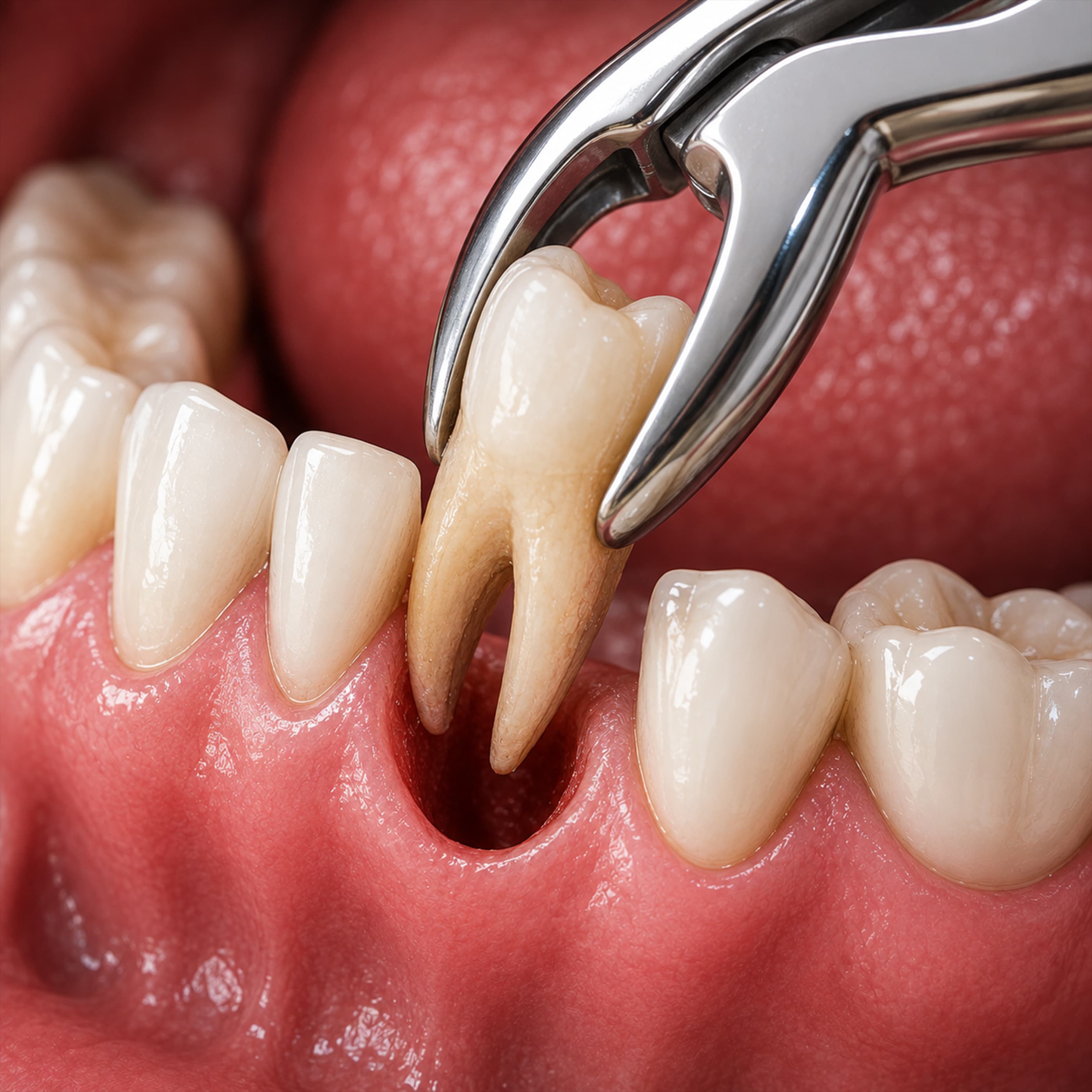
Tooth Extraction
Safely removing teeth that cannot be saved.
Dentist Büşra Kayan · Neon Klinik · Kemerburgaz, Eyüpsultan
Tooth extraction is used for teeth that are severely decayed, fractured, loose, or otherwise cannot be saved through treatment.
Before the procedure, the tooth and surrounding tissue are assessed, and an X-ray may be taken to examine the root structure if needed.
How the area will be restored afterward (implant, bridge, denture, etc.) is discussed and planned together with the patient.
Suitability for all treatments above is determined after an in-person examination and clinical assessment.
Who Is It Suitable For?
Tooth extraction is considered for severely decayed, fractured, excessively loose teeth, or teeth that cannot be saved through treatment.
The decision to extract is made based on the tooth's condition and, if needed, X-ray imaging.
How Does It Work?
The tooth is carefully separated from its surrounding connective tissue and removed.
Depending on the tooth's position and root, the procedure may require a standard or surgical approach.
How Is The Treatment Performed?
Local anesthesia is applied to the area.
The tooth is removed using the appropriate technique.
Stitches may be placed if needed.
What Should Be Considered Afterward?
Applying gentle pressure to the area in the first hours helps reduce bleeding.
Avoiding hard and hot foods for a while is recommended.
Contact your dentist if you experience severe pain, swelling, or prolonged bleeding.
Frequently Asked Questions
About This TreatmentIs tooth extraction painful?
The procedure is performed under local anesthesia; mild discomfort may occur afterward.
When can I eat after an extraction?
Starting with soft foods once the anesthesia wears off is recommended.
Should the gap be filled after extraction?
Options like implants, bridges, or dentures can be considered for chewing function and to prevent nearby teeth from shifting.
How long does healing take after extraction?
Healing time varies by individual; most people return to daily activities within a few days.
How long does bleeding last?
Mild bleeding is normal in the first hours; if it continues for a long time, contact your dentist.
Can I smoke after an extraction?
Smoking can negatively affect healing; pausing for a while is recommended.
Is every extraction the same?
No, the complexity of the procedure can vary depending on the tooth's position and root.
Why isn't pricing listed on the website?
Turkey's Ministry of Health advertising regulations prohibit healthcare providers from advertising prices or promotions. In addition, the amount of material and number of sessions needed vary by person, so a single figure would be misleading. Information specific to you is shared directly after an examination.