

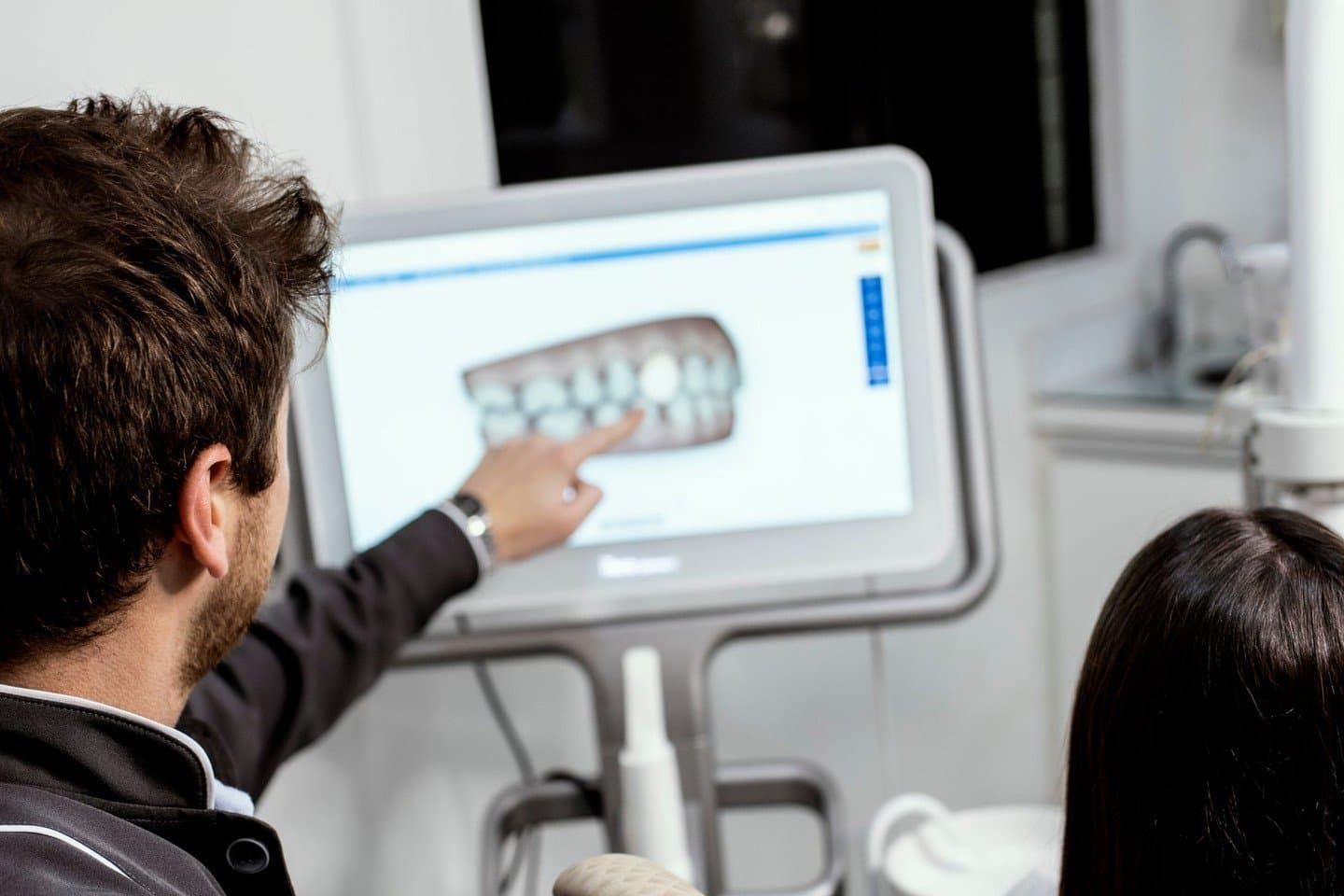
When I say "smile design," most of my patients picture a single procedure — but it's actually the name for a planning process that runs from digital analysis to the final result across several stages. Which treatments come together in that plan varies completely from person to person.
In this article, I explain how the smile design process generally unfolds — from the recording stage, to digital planning, to the treatments themselves. Which treatments are right for you can only be determined after an exam and digital analysis.
Key Takeaways
- Smile design isn't a single treatment — it's a process that brings multiple treatments together under one plan.
- The process starts with recording the current state through photos and a digital scan.
- The target appearance is simulated digitally and shared with the patient before any treatment begins.
- Active decay or gum disease needs to be treated before aesthetic planning starts.
- Total duration and number of sessions vary widely depending on which treatments the plan includes.
What Exactly Is Smile Design?
Smile design is a planning approach that evaluates tooth color, shape, size, alignment, and how the gums contribute to the overall appearance of a smile — as a whole. The key phrase here is "as a whole," since the focus isn't on a single tooth but on the overall look of the smile.
The treatment that results from this planning can look completely different from one patient to the next. For some patients, teeth whitening alone is enough; for others, a combination of composite bonding, veneers, or zirconia crowns may be planned together. That's why there's no single answer to "how long does smile design take" or "how many sessions does it need" — the answer depends entirely on which treatments the plan includes.
Why Does the Process Start With an Exam and Digital Analysis?
Smile design doesn't start with an aesthetic change — it starts with an oral exam. The reason is simple: aesthetic planning needs to be built on a healthy foundation. Moving forward with an aesthetic plan while active decay, gum inflammation, or an untreated infection is present puts both the durability of the result and overall oral health at risk.
Once dental and gum health have been assessed at the exam, the process moves to digital smile analysis. This analysis involves recording and examining the current tooth structure through photos and a digital scan — the rest of the process is shaped largely by what this analysis finds.
Stage 1: Recording and Assessment
In the first stage, photos are taken and an intraoral digital scan is performed to objectively assess the current state. These records aren't just for a before-and-after comparison — they're also used to examine how the teeth relate to each other, to the lips, and to the gums.
At this stage, how much the lip line reveals the teeth when smiling, whether the gum level is symmetrical, and how well the teeth harmonize with the overall proportions of the face are all observed. These details form the foundation for the digital planning stage that follows.
Stage 2: Digital Planning and Simulation
Once the records are complete, the target appearance is simulated digitally. This simulation shows visually which teeth would need a change in color, shape, or alignment, and whether an adjustment to the gum line is needed.
One of the most practical benefits of digital planning is that the patient can see the final result before treatment even begins. This helps set realistic expectations and helps the dentist and patient finalize the plan together. That said, it's worth stating an important point clearly: a digital simulation is a prediction, not a one-to-one guarantee of the final result in the mouth — biological factors like tooth structure, material properties, and healing can all affect the final appearance.
Stage 3: Reviewing and Approving the Plan
Once the digital plan is ready, it's reviewed together with the patient. This stage is one of the most commonly skipped but actually most important steps in the process — aesthetic expectations can vary significantly from person to person.
This conversation covers which treatments will be included in the plan, their approximate duration, and their order. Asking your questions at this stage, before treatment begins, prevents potential misunderstandings later. The approved plan becomes the roadmap for the stages that follow.
Stage 4: Sequencing and Carrying Out the Treatments
Based on the approved plan, the necessary treatments are carried out in sequence or, in some cases, together. Depending on the patient's needs, these treatments can include one or more of the following:
- Teeth whitening: If the goal includes lightening the natural tooth shade, this is usually planned as one of the first steps — since the shade of any later restorations can be matched to the whitened tooth color.
- Composite bonding: Used to correct minor shape irregularities or gaps with minimal intervention to the tooth structure.
- Veneers: Considered when a color, shape, or size change needs to be addressed in a more durable and comprehensive way.
- Zirconia crowns: May be preferred for teeth that need more structural support or that already have an existing crown.
- Gum aesthetics: If the gum line is asymmetrical or there's excessive gum visibility (sometimes called a "gummy smile"), this can also be included in the plan.
Overview of the Stages
A brief summary of the four stages above:
| Stage | What Happens |
|---|---|
| 1. Recording and Assessment | Recording the current state through photos and a digital scan. |
| 2. Digital Planning | Simulating the target appearance digitally. |
| 3. Review and Approval | Reviewing and approving the plan together with the patient. |
| 4. Treatment | Carrying out the approved treatments in sequence or together. |
Aesthetic Principles Considered in Smile Design (General Overview)
During digital planning, dentists consider the proportion between teeth, how well the midline aligns with facial symmetry, how much gum shows when smiling, and the relationship between the lip line and the teeth. This assessment isn't about imposing a "mathematical template" on the teeth — it's about finding the balance that best suits the individual's own facial structure.
It's worth clarifying an important misconception here: aesthetic principles are a starting point, not a rigid rule set. Since everyone's facial structure, lip dynamics, and tooth structure are different, what's considered an "ideal" proportion can be slightly adapted for a natural look in some patients. The final decision is shaped together with the patient at the exam, based on their own facial features.
Who Is Smile Design Suitable For, and Who Needs Preparation First?
Smile design can be considered for people whose overall dental and gum health is good, but who aren't satisfied with the color, shape, or alignment of their smile. However, if active decay, untreated gum inflammation, or uncontrolled bruxism (teeth grinding/clenching) is present, these need to be addressed before aesthetic planning.
If tooth alignment is significantly irregular, the smile design plan may also include orthodontic treatment (braces or clear aligners). In that case, the process can extend to include moving the teeth into the correct position before the aesthetic restorations. This possibility is assessed during the digital analysis and discussed with the patient.
Smile Design vs. a Single Treatment (e.g., Whitening Alone)
For some patients, a single treatment (such as teeth whitening alone) may be enough to meet their expectations without needing the full smile design process. The smile design approach comes into play when a more comprehensive change is wanted — one that requires evaluating multiple elements (color, shape, alignment, gum appearance) together.
This distinction becomes clear at the first exam. Your dentist evaluates together with you whether your expectations can be met with a single treatment or require a more comprehensive plan — recommending more treatment than necessary runs counter to the whole point of smile design.
What Affects How Long the Result Lasts
How long the treatments included in a smile design plan last depends on the materials used and the patient's oral care habits. For example, the effect of teeth whitening can fade over time, while restorations like veneers or zirconia crowns can last for many years with proper care.
Regular brushing, flossing, and periodic dental cleaning appointments help preserve the appearance of both natural teeth and restorations. For patients with a teeth-grinding or clenching habit, using a night guard may be recommended to protect the restorations.
Common Misconceptions About Smile Design
One misconception I hear often from patients is that smile design means applying the same, standard smile template to everyone. In reality, it's the opposite — it's a planning process tailored to each person's own facial structure; no two patients get the same plan.
Another common misconception is expecting the result seen in the digital simulation to appear identical in the mouth. Digital simulation is a powerful planning tool, but the final result can differ slightly from the simulation depending on tooth structure, the material chosen, and biological factors inside the mouth. This possibility should be discussed with the patient before the plan is approved.
Questions You Might Ask at the Exam
Some questions worth asking at your smile design exam to clarify how the process will look for you specifically:
- Which treatments are needed to meet my expectations, and how many will be planned together?
- Roughly how many sessions or months will the whole process take?
- Do I need orthodontic treatment?
- What kind of differences might there be between the digital simulation and the result in my mouth?
- How does aftercare differ across the treatments included in the plan?
Frequently Asked Questions
Is smile design completed in a single session?
No, it depends on which treatments are included in the plan; some cases need a few sessions, while others require a longer process.
Is smile design purely aesthetic?
Alongside aesthetic improvement, elements that support dental function can also be included in the plan; the scope is determined at the exam.
Do I have to decide without seeing the digital simulation first?
No, that's exactly what the digital simulation is for — you can see and evaluate the target appearance before treatment begins.
How does aftercare change after smile design?
Aftercare depends on which treatments are included in the plan; your dentist will share care recommendations specific to you after the procedure.
Is smile design suitable for everyone?
Suitability is assessed at the exam based on dental and gum health; in some cases, another treatment needs to be completed first.