

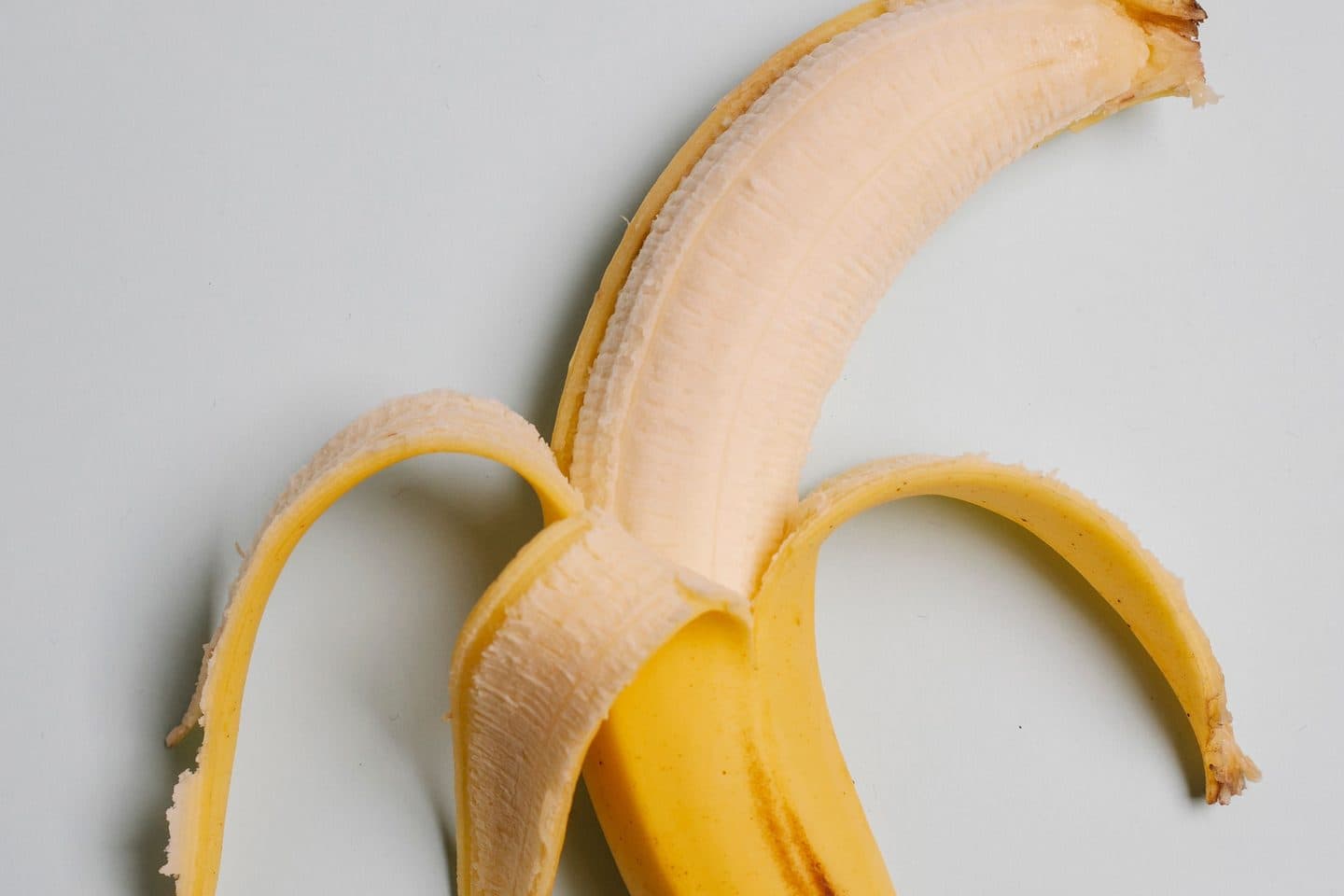
Does Banana Peel Whiten Teeth? What the Science Actually Says
August 24, 2026 · Dentist Büşra KayanThere's a trend going around social media: people claim that rubbing a banana peel on your teeth for a couple of minutes whitens them at home, for free. The videos rack up millions of views, and the comments are full of people saying "I tried it, it actually worked." Does this actually work, or is it just another social-media myth?
In this article, I explain the logic behind the claim, what a study that directly tested it actually found, and where other popular "natural" whitening methods — activated charcoal, turmeric — stand. It's a question I hear from patients often, and I want to answer it as clearly as the evidence allows.
Key Takeaways
- A 2022 lab study published in the Brazilian Dental Journal, using 70 enamel samples, found that banana peel produced no measurable whitening effect, even when tested over the equivalent of 30 days of brushing.
- Spectrophotometer measurements found no statistically significant difference between banana peel and plain toothpaste (p > .05) — banana peel performed about the same as using nothing at all.
- In the same study, banana peel didn't whiten teeth — it caused mild yellowing, which researchers attributed to carotenoid pigments from the peel transferring onto the enamel.
- Tooth enamel isn't a structure that absorbs minerals from food rubbed against its surface, so the potassium/magnesium claim behind the trend doesn't match how enamel actually works.
- Banana peel itself is harmless, but acidic alternatives popular in the same trend — like lemon or orange peel — carry a real enamel erosion risk with repeated use.
- Safe, effective whitening starts with an exam to determine which type of discoloration you actually have (surface staining vs. the tooth's own structure) and whether it will respond to whitening at all.
Where Does the "Banana Peel Whitens Teeth" Claim Come From?
The logic behind the trend goes like this: banana peel contains potassium, magnesium, and a small amount of manganese, and these minerals are claimed to "transfer" into teeth and whiten them. The recommended method is usually the same one — rubbing the inside of the peel on your teeth for about two minutes a day.
It sounds plausible on the surface, but the assumption the claim rests on — that minerals can pass into enamel through brief surface contact — doesn't match how tooth enamel actually works biologically. The next section looks at a study that tested this directly.
Does Banana Peel Actually Contain These Minerals?
Here's an interesting wrinkle: it isn't wrong that banana peel contains potassium, magnesium, and manganese — these are genuinely present in fruit peels. The problem isn't whether the minerals are there; it's how the body actually uses them.
Those minerals can be absorbed into the bloodstream through digestion — when you eat them — but that's a completely different mechanism from passing into an oral tissue (like enamel) through brief, external surface contact. Tooth enamel isn't a mineral-absorbing organ the way the digestive system is; it's a hard, essentially non-porous crystalline structure. So while it's true that "banana peel contains minerals," the conclusion that "these minerals pass into teeth and whiten them" doesn't hold up scientifically.
What Does the Scientific Evidence Say?
A 2022 in vitro study (lab-based, on tooth enamel samples) published in the Brazilian Dental Journal directly tested several popular "natural" whitening methods, including banana peel. Banana peel was tested over periods equivalent to 14 and 30 days of brushing.
The study's methodology was notably rigorous: researchers used 70 enamel samples split into five groups of 14, each assigned to a different method — conventional toothpaste, activated charcoal, turmeric, banana peel, and 16% carbamide peroxide. Color change wasn't judged by eye; it was measured with a VITA EasyShade spectrophotometer using CIE L*a*b* color coordinates and quantified with the ΔE00 (CIEDE2000) formula.
The result was clear: banana peel didn't reach a perceptible whitening threshold at either time point. Statistically, the color-change difference between banana peel and plain toothpaste wasn't significant (p > .05) — banana peel performed about the same as using nothing at all. By contrast, the 16% carbamide peroxide group showed a statistically significant improvement over banana peel (p < .05) — that's a standard, dentist-supervised whitening agent.
There was also an unexpected finding: because carotenoid pigments from the peel transferred onto the enamel surface, banana peel actually caused mild yellowing instead of whitening.
Why Doesn't Banana Peel Whiten Teeth?
Whitening gels (containing hydrogen peroxide or carbamide peroxide) actually penetrate the enamel structure and break down the pigment molecules that cause discoloration. The minerals in banana peel don't do this — enamel isn't a tissue that "absorbs" minerals from food it briefly touches.
So the exact amount of potassium or magnesium in a banana peel doesn't really matter; the real issue is that there's no mechanism for those minerals to pass into the enamel surface in the first place. That undermines the core assumption behind the claim.
So Why Do Some People Think It Worked?
Given how clear the evidence is, it's worth asking why plenty of people online insist "I tried it and it actually worked." The likely explanation isn't the banana peel itself, but how the method is applied: rubbing something on your teeth for two minutes is, in effect, an extra round of mechanical cleaning — similar to brushing, it can dislodge loose plaque and light surface residue.
That's not the same as the tooth's own color changing; it's just less surface buildup, which can make teeth look a bit cleaner and slightly lighter by comparison. This effect isn't specific to banana peel — rubbing your teeth with a finger or a clean cloth for the same amount of time can create a similar "cleaner" feeling.
Do Other "Natural" Methods Like Activated Charcoal or Turmeric Work Either?
The same study also tested activated charcoal and turmeric — two other "natural" methods frequently recommended on social media. Activated charcoal never reached a perceptible whitening threshold at either time point. Turmeric was more mixed: at 14 days it caused noticeable staining, and while its measured color change crossed a threshold by 30 days, the researchers attributed that to abrasive removal of the earlier staining rather than a genuine bleaching effect.
Activated charcoal raised a different concern: it increased the roughness of the enamel surface. According to the study's discussion, this added roughness also changes how the surface reflects light — a rougher surface scatters light more diffusely, which can affect the perception of gloss and color. So someone using activated charcoal might notice a short-term "difference," but it isn't real whitening — it's a perception shift caused by a change in surface texture. And a rougher surface tends to pick up stains more easily over time, meaning trying to whiten with activated charcoal carries a real risk of the opposite long-term effect.
Types of Tooth Discoloration: Why Doesn't Everyone Get the Same Result?
To understand why methods like banana peel don't work, it helps to know that tooth discoloration isn't one single thing. In dentistry, discoloration is broadly split into two categories: extrinsic (surface) staining and intrinsic (structural) discoloration.
Extrinsic staining comes from external sources like tea, coffee, red wine, or smoking depositing pigment on the tooth surface — this type often responds well to professional cleaning and, in some cases, whitening. Intrinsic discoloration comes from the tooth's own structure — genetics, enamel thinning with age, certain childhood antibiotics (such as tetracyclines), or trauma can all play a role; this type usually shows up as grey or brown tones and responds only partially to whitening gels, or not at all.
Even in theory, a method like banana peel could only ever reach a surface-level (extrinsic) effect — and as the study shows, it doesn't even manage that. That's also why comparisons like "it didn't work for me but it worked for my friend" can be misleading; two different sets of teeth can have entirely different types of discoloration.
Is Banana Peel Harmful? What About Lemon or Orange Peel?
According to this study, banana peel itself doesn't harm teeth — it just doesn't work. The same can't be said for the acidic alternatives often recommended in the same trend, like lemon or orange peel.
According to the American Dental Association, frequent, repeated consumption of acidic foods can contribute to enamel erosion. Rubbing an acidic peel directly on tooth surfaces adds to that risk — especially if you brush right afterward, since enamel that's been temporarily softened by acid can be worn away further during brushing.
The ADA recommends a few simple precautions: waiting at least an hour before brushing after contact with an acidic food or peel, or rinsing with water instead of brushing right away, both of which can keep the acid's effect from turning into additional wear during brushing. But these precautions don't make an already-ineffective method "safer" in any meaningful sense — it still doesn't whiten anything; it just reduces the risk.
What Actually Whitens Teeth Safely and Effectively?
The findings above show that most "natural" and DIY methods don't deliver the expected result. Whitening options with known safety and effectiveness are ones that are dentist-supervised or at least chosen with a dentist's guidance:
The UK's National Health Service (NHS) makes a similar point on its teeth whitening page: because the chemicals involved are strong, whitening should only be carried out or prescribed by a dentist, and kits from beauty salons, pharmacies, or online "work less well and may harm your teeth and gums" (NHS, "Teeth Whitening", retrieved 2026-08-24).
| Method | How It Works | Best For |
|---|---|---|
| Whitening toothpaste | Removes surface stains with mild abrasives; doesn't change the tooth's own color | Mild, surface-level (extrinsic) staining |
| Over-the-counter whitening strips | Contain a lower concentration of peroxide | A limited but noticeable brightening |
| Dentist-supervised at-home trays | A custom-fitted tray with a higher-concentration gel, used over a set period | A more visible, controlled result |
| In-office professional whitening | Dentist-administered, usually a single session, at the highest concentration | A fast, noticeable result in one visit |
What About Tartar and Surface Stains?
In some cases, what looks like "yellow teeth" isn't really the tooth's natural color at all — it's accumulated tartar or surface staining from sources like tea, coffee, or smoking. In that kind of staining, what's actually needed isn't whitening but professional scaling, since that removes the buildup on top of the tooth without changing the tooth's own color.
Tartar is plaque that has hardened over time and can no longer be removed with brushing or flossing at home; it can only be removed with professional instruments. That's why the complaint "no matter how well I brush, my teeth still look yellow" often isn't about brushing technique at all — it's about tartar's nature as something home care simply can't remove.
Telling which situation applies to you — your natural tooth color or surface buildup — is only possible with an exam; I covered this in more detail in "What to Know Before Teeth Whitening."
Bottom Line: Don't Trust Banana Peel, But Don't Panic Either
The takeaway is clear: banana peel doesn't whiten teeth, and neither do activated charcoal or turmeric. Having tried them doesn't mean you've done lasting damage — banana peel is harmless on its own, and the surface roughness caused by activated charcoal generally reverses over time with normal oral care.
What matters more is what you do next. Before trying the next "free whitening hack" you see online, ask a simple question: has this claim actually been tested in a real study, or is it just a claim? As this article shows, the answer is usually the latter.
If you're genuinely bothered by the color of your teeth, the right place to start is an exam — it clarifies the type of discoloration you have and points you toward a method that's actually suited to you and safe.
Frequently Asked Questions
Is rubbing banana peel on your teeth harmful?
According to this study, no — banana peel doesn't harm teeth, it's just not effective for whitening and can even cause mild yellowing.
Does activated charcoal actually whiten teeth?
No — the same study found activated charcoal produced no meaningful whitening either, and it can increase enamel roughness, making teeth more prone to staining over time.
Can I whiten my teeth with lemon or orange peel?
This method's whitening effect isn't supported by evidence, and its acidic content carries a real enamel erosion risk with repeated use, so it isn't recommended.
Does professional scaling whiten teeth?
Scaling doesn't change the tooth's own color, but it removes accumulated tartar and surface stains, which can make teeth look noticeably lighter.
What should I do instead of DIY methods?
The most reliable way to get the result you're looking for is to have an exam to determine the type of discoloration you have, then choose a dentist-supervised method suited to you.
Was this study done on real human teeth?
No, it was an in vitro (lab-based) study using tooth enamel samples — it doesn't perfectly replicate real conditions inside the mouth, but it provides a controlled, measurable comparison, which makes it a reliable source of evidence.
How do I know if my discoloration is natural or from staining?
It's hard to tell this on your own with certainty; a dental exam can clarify whether the discoloration is surface-level (which cleaning may improve) or comes from the tooth's own structure.
Is trying banana peel a waste of time?
Based on the evidence, yes — expecting a measurable whitening effect isn't realistic. Being harmless doesn't mean it's useful; that time is better spent on a method your dentist actually recommends.