

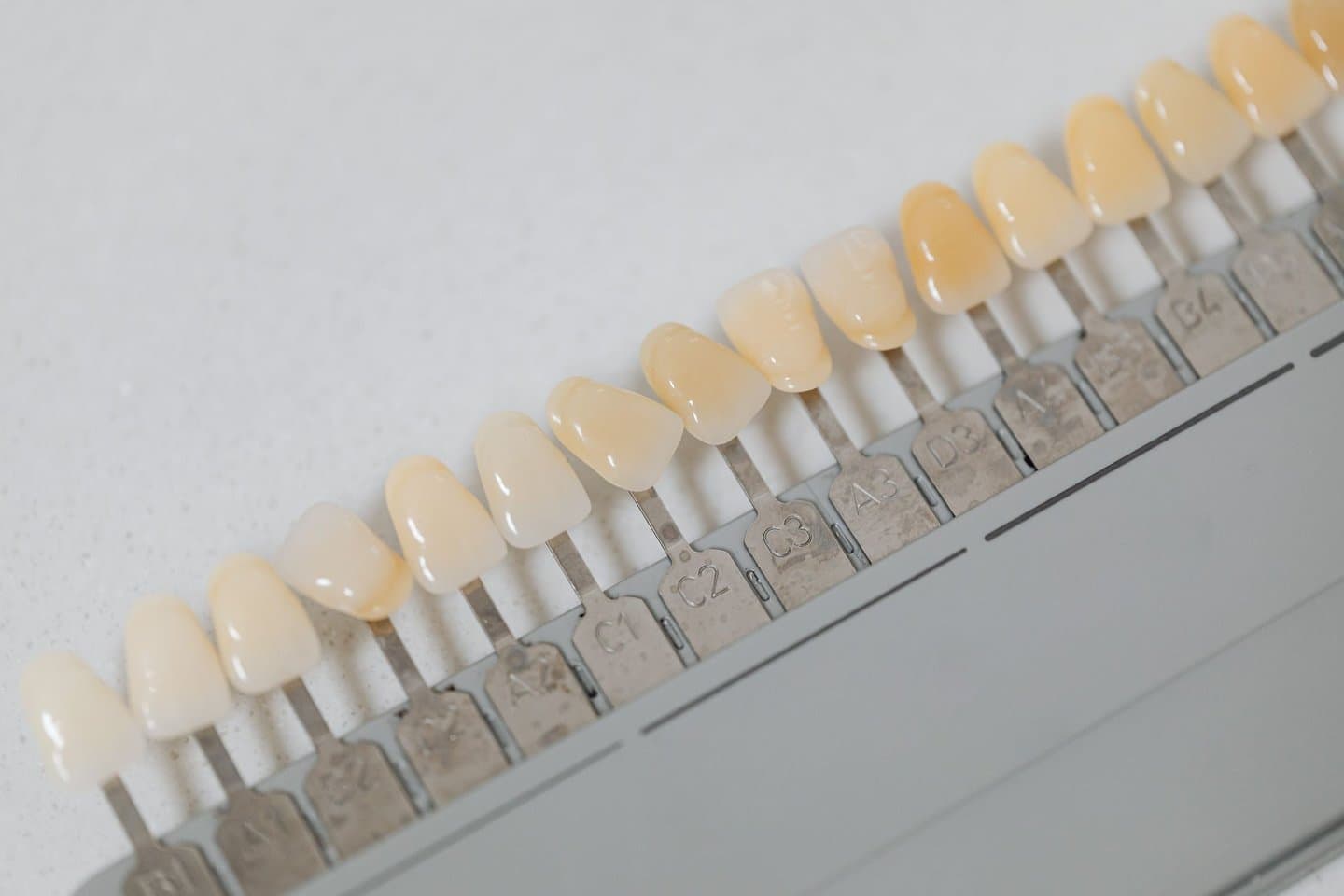
Teeth whitening is one of the aesthetic treatments my patients ask about most; but there are a few important things worth knowing before deciding — not every kind of discoloration responds the same way, and whitening doesn't produce the same result on every tooth structure.
In this article, I explain how teeth whitening works, in which cases it may not deliver the expected result, and why an exam matters before making a decision. I'm only discussing methods applied under a dentist's supervision; whether it's suitable for you can only be determined after an exam.
Key Takeaways
- Whitening gels break down the color pigments in tooth enamel to make teeth appear lighter.
- Yellow tones generally respond well, brown tones respond more moderately, and gray tones often don't respond at all.
- Whitening only works on natural tooth enamel — it won't lighten crowns, veneers, or fillings.
- Cavities, sensitivity, or gum problems need to be treated before whitening.
- Avoiding dark-colored foods and drinks for the first 48 hours helps the result last.
How Does Teeth Whitening Work?
Whitening gels contain active ingredients such as hydrogen peroxide or carbamide peroxide. These compounds penetrate the enamel and break down the pigment molecules that cause discoloration into smaller fragments — reducing the color's intensity and making the tooth appear lighter.
In-office treatment uses a higher-concentration gel and is usually completed in a single session. At-home treatment uses a lower-concentration gel applied with a custom-fitted tray over a set period.
Why Is an Exam Necessary Before Whitening?
An oral exam before whitening isn't just a formality — it's a real necessity. Whitening isn't recommended when active decay, cracked teeth, worn enamel surfaces, or gum inflammation are present; these need to be assessed and treated first if needed.
Teeth with gum recession or exposed roots also need additional evaluation before whitening. This preliminary assessment helps ensure whitening is done safely and avoids unexpected sensitivity or irritation.
Not Every Type of Discoloration Responds the Same Way
How well whitening works depends on what caused the discoloration. Surface-level yellow tones from coffee, tea, smoking, and colored foods generally respond well to whitening. Brown tones may show a more limited response, while gray tones (sometimes linked to certain medications or internal discoloration after trauma) often don't respond at all.
That's why understanding the underlying cause of the discoloration matters before deciding on whitening — the same approach doesn't produce the same result for every type of staining.
Whitening Doesn't Work on Crowns, Veneers, or Fillings
Whitening only affects natural tooth enamel. The color of existing crowns, veneers, or composite fillings won't lighten with whitening. This is an important aesthetic consideration: if you have a visible restoration in the front of your mouth, your natural teeth may lighten after whitening while the restoration stays the same color, creating a mismatch.
In that case, whether the restoration needs to be replaced after whitening should be assessed separately. This is a possibility worth discussing during the exam, before starting.
Who Isn't a Good Candidate for Teeth Whitening?
While whitening is generally considered a safe aesthetic treatment, it isn't always the first option for everyone. Whitening should be postponed for people with a known sensitivity or allergy to peroxide ingredients, or with mouth sores or inflamed gum tissue.
Whitening also isn't generally recommended for children and teens whose teeth are still developing. Some patients with unusually high tooth sensitivity may need a different timing or approach. All of these situations are addressed individually during the exam.
In-Office vs. At-Home Whitening: What's the Difference?
In-office whitening is completed in a single clinic visit; it usually takes 45-60 minutes and produces a faster result. At-home whitening uses a custom-fitted tray with gel used at home over a set period — the result usually appears gradually over a few days to a few weeks.
Both methods are planned under a dentist's supervision; which one suits you best is determined during the exam based on your expectations and tooth structure.
How Whitening Relates to Smile Design
Teeth whitening can sometimes be a sufficient aesthetic solution on its own, and sometimes it's considered the first step of a broader smile design plan. For example, in patients planning veneers or crowns, whitening the natural teeth to the target shade first and then matching the restorations to that shade may be preferred.
This approach helps achieve a more harmonious result between the natural teeth and the restorations. Whether whitening should be considered on its own or as part of a broader plan is discussed during the exam based on your expectations.
Sensitivity During and After the Procedure
Temporary tooth sensitivity after whitening is quite common — particularly to hot or cold stimuli. This sensitivity usually subsides on its own within a few days.
Your dentist may recommend a special toothpaste or gel to reduce sensitivity. If your sensitivity lasts longer than expected or is severe, it's a good idea to let your dentist know.
The First 48 Hours After Whitening: A Sensitive Window for Staining
For the first 48 hours after whitening, enamel can be more susceptible to color pigments than usual. During this period, avoiding dark-colored drinks like coffee, tea, red wine, and cola, as well as dark-colored foods like soy sauce and tomato-based sauces, helps protect the result.
Smoking is also specifically discouraged during this period, since it affects both staining and overall dental health.
What Affects How Long the Result Lasts
Whitening results aren't permanent — over time, teeth can gradually darken again depending on daily habits. Regular coffee/tea consumption, smoking, and insufficient oral hygiene can cause the result to fade faster.
Regular dental cleanings and a good oral care routine help the result last longer. Some patients choose to repeat whitening at intervals ranging from a few months to a few years.
Long-Term Care After Whitening
Beyond the sensitive first 48-hour window, a few habits help preserve the result over the long term. Regular brushing and flossing slow the buildup of new staining.
Drinking dark-colored beverages through a straw where possible can reduce their contact with your teeth. Regular dental cleaning appointments also benefit both overall oral health and the appearance of the whitening result.
Common Misconceptions About Teeth Whitening
There are many "natural method" claims circulating online about teeth whitening — there's no reliable scientific evidence that home remedies like oil pulling, turmeric, baking soda, or lemon actually whiten teeth. In fact, abrasive or acidic substances like baking soda or lemon are known to potentially damage enamel.
Another common misconception is that "higher concentration always means a better result" — in reality, the correct concentration and application time should be determined by your dentist based on your tooth structure and sensitivity level. Uncontrolled or non-prescribed use of high-concentration products can increase sensitivity.
In-Office vs. At-Home Comparison
A brief comparison of the two methods:
| Feature | In-Office | At-Home |
|---|---|---|
| Number of sessions | Usually a single session | Regular use over several days to weeks |
| Speed of results | Seen faster | Appears gradually |
| Where it's done | At the clinic | At home, with a custom tray |
| Supervision | Performed under direct dentist supervision | Applied at home per dentist's instructions |
Questions You Might Ask at the Exam
Some questions worth asking at your exam to clarify how the process will look for you specifically:
- What's causing my discoloration, and will it respond well to whitening?
- If I have a crown or filling in the front of my mouth, how does that affect things?
- Would you recommend in-office or at-home whitening for me, and why?
- If I have a history of sensitivity, how does that change the process?
- How long can I expect the result to last?
Frequently Asked Questions
Does teeth whitening damage tooth enamel?
When applied under a dentist's supervision at the appropriate concentration and duration, it's considered a safe treatment method. Uncontrolled or non-prescribed use carries risk.
Can whitening be done during pregnancy or breastfeeding?
Whitening is generally postponed during these periods; you should discuss the final decision with your dentist.
What happens if the gel contacts the gums?
Temporary irritation can occur; gums are specifically protected during the procedure, which is why it's important to have it performed by an experienced dentist to minimize this risk.
Do I need to change my toothpaste after whitening?
Your dentist may recommend a special toothpaste to help maintain the result; this is entirely optional support.
Is whitening done for people under 18?
Whitening generally isn't recommended for people whose teeth are still developing; suitability is assessed during the exam.