

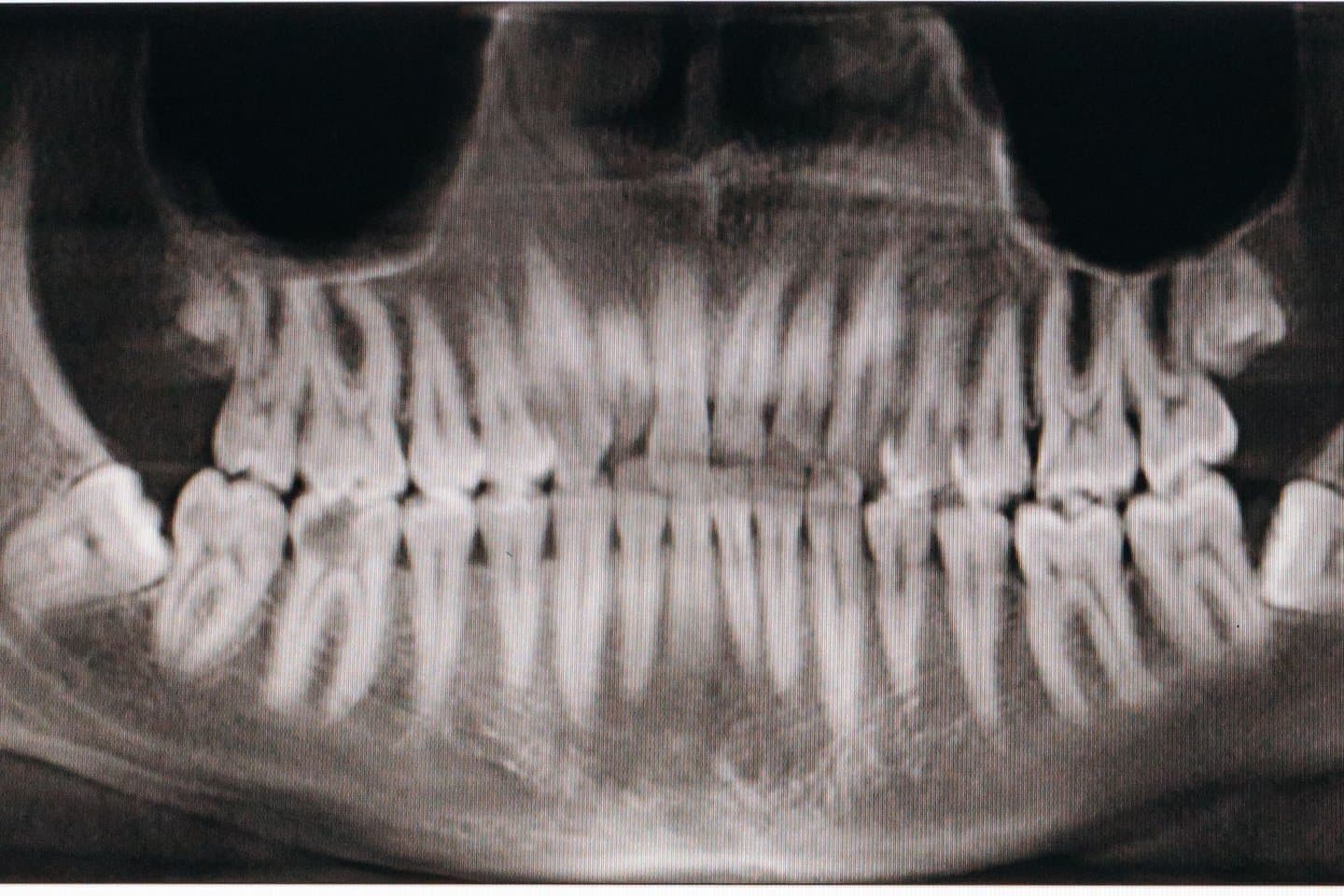
How Long Does Bone Fusion Take After a Dental Implant?
August 24, 2026 · Dentist Büşra KayanOnce the decision for implant treatment is made, the question I hear most from patients is: "when will the bone fuse, and when can I get my permanent tooth?" That waiting period looks like the quietest stage of implant treatment, but it's actually the most critical one.
This article doesn't walk through the steps of implant treatment — I covered that in detail in "The Dental Implant Process, Step by Step" — it focuses specifically on how long osseointegration (bone fusion) takes, what affects that timeline, and how reliable it is in the long run, based on scientific sources.
Key Takeaways
- Under the classic protocol, osseointegration takes about 3-4 months in the lower jaw and 6-8 months in the upper jaw; the upper jawbone generally being less dense is the main reason for that difference.
- Smoking increases implant failure risk by roughly 140% (according to a meta-analysis covering 292 studies) and significantly increases bone loss.
- In well-controlled diabetes (HbA1c ≤7%), implant survival rates stay comparable to non-diabetic patients — 97.3% at 1 year, 96.1% at 5 years.
- If a bone graft is needed, healing of the graft itself typically adds another 3-6 months before implant placement — the total timeline can then reach 6-14 months.
- No significant difference in failure rates has been found between immediate and conventional loading, but the evidence quality on this is rated "very low" — the decision depends on the dentist's clinical assessment.
- Long-term data supports the reliability of osseointegration: implants still function at about a 96% rate after 10 years.
What Is Osseointegration (Bone Fusion)?
Osseointegration is the process by which a titanium implant placed in the jawbone forms a direct, tight bond with the surrounding bone tissue over time. Once that bond is complete, the implant becomes strong enough to carry chewing forces like a natural tooth root.
I covered how implant treatment proceeds step by step — from surgical placement through to fitting the permanent tooth — in "The Dental Implant Process, Step by Step." This article focuses only on the waiting period itself: how long fusion takes and what affects that timeline.
Does the Lower Jaw Fuse Faster Than the Upper Jaw?
Under the classic implant protocol (the Brånemark protocol), fusion time varies significantly depending on jaw location. According to a Cochrane systematic review, the expected fusion time is 3-4 months in the lower jaw (mandible) and 6-8 months in the upper jaw (maxilla) (Cochrane, Esposito et al., "Interventions for Replacing Missing Teeth: Different Times for Loading Dental Implants," 2013).
The main reason for this difference is bone structure: the lower jawbone is generally denser and more compact, which contributes to faster, more predictable fusion. The upper jawbone is typically less dense, which is why the fusion process can take longer.
| Location | Typical Fusion Time |
|---|---|
| Lower jaw (mandible) | 3-4 months |
| Upper jaw (maxilla) | 6-8 months |
How Does Bone Density Affect Fusion Time?
In dentistry, bone quality is classified into four types under the Lekholm & Zarb classification: Type I (entirely homogeneous compact bone), Type II (a thick layer of compact bone surrounding dense trabecular bone), Type III (a thin layer of compact bone surrounding dense trabecular bone), and Type IV (a thin layer of compact bone surrounding sparse trabecular bone) (Journal of International Society of Preventive & Community Dentistry, "Jawbone Quality Classification in Dental Implant Planning and Placement Studies: A Scoping Review," 2024).
Adequate bone quality is described as a prerequisite for the implant reaching both primary stability (mechanical, at placement) and secondary stability (biological, after fusion). As a general trend, denser bone makes fusion more predictable — but that doesn't translate into an exact week or month count for each type; how your own bone structure affects fusion time can only be assessed through an exam and imaging.
This distinction in stability also connects to the loading-timing decision covered further below: whether the implant reaches adequate primary stability early on is one of the criteria that shapes whether the dentist recommends immediate or conventional loading.
How Does Smoking Affect Fusion?
Smoking is one of the best-documented factors that negatively affects the fusion process. A systematic review and meta-analysis covering 292 studies (35,511 implants in smokers and 114,597 in non-smokers) found that implant failure risk in smokers is about 140% higher than in non-smokers (OR 2.402; 95% CI 2.176-2.652; p<0.001). The same study also found significantly more bone loss in smokers (mean difference 0.580mm, p<0.001) (Medicina (Kaunas), "Smoking and Dental Implants: A Systematic Review and Meta-Analysis," 2021).
This doesn't mean a smoker can't get an implant — it means the risk is higher and the fusion process needs closer monitoring. The ADA also notes that tobacco use can slow healing (ADA MouthHealthy, "Implants," retrieved 2026-08-24).
Does Diabetes Affect Fusion?
Diabetes has long been known as a factor that can affect implant success, but current data shows well-controlled diabetes isn't as large an obstacle as often assumed. In type 2 diabetic patients, implant survival was found to be 97.3% at 1 year (95% CI 94.3-98.7) and 96.1% at 5 years (95% CI 87.3-98.9) — comparable to non-diabetic populations when well managed (Cureus, "Success Rates of Dental Implants in Patients With Diabetes: A Systematic Review," 2024).
The key factor here is blood sugar control. Well-controlled diabetes is generally defined as an HbA1c of 7% or below, and poorly controlled diabetes as above 8%. The same study found that well-managed diabetes (HbA1c <8%) doesn't significantly lower implant survival rates; however, as glycemic control worsens, complications like bone loss and pocket depth around the gum can increase. In short, having diabetes doesn't mean you can't get an implant — what matters is having your blood sugar management assessed together with your dentist.
How Much Longer Does the Process Take If a Bone Graft Is Needed?
In some patients, the jawbone may not be dense or voluminous enough to directly support an implant. In that case, a bone graft may be needed before implant placement. According to the UK's National Health Service (NHS), the graft itself is typically left to heal for 3 to 6 months (NHS, Guy's and St Thomas' NHS Foundation Trust, "Bone Grafting for Dental Implants," retrieved 2026-08-24).
This means that in cases requiring a graft, the total treatment timeline spans two stages: graft healing, plus the implant's own fusion time. Whether a graft is needed and how long it will take can only be determined after an exam and imaging.
How Long Can the Total Process Take? A Realistic Timeline
Putting the factors covered so far together gives a realistic picture of total timelines. In a case that doesn't need a graft, baseline fusion time ranges from 3-8 months depending on location; in a case that does need a graft, the graft's own 3-6 month healing period is added on top of that.
The figures below are general ranges drawn from the studies discussed above; the actual timeline that applies to you is confirmed by your dentist after an exam and imaging. Smoking, uncontrolled chronic conditions, or unexpected healing complications can extend these timelines.
| Scenario | Approximate Total Time |
|---|---|
| Lower jaw, no graft needed | 3-4 months |
| Upper jaw, no graft needed | 6-8 months |
| Graft needed (either jaw) | 6-14 months (graft healing + fusion) |
Is Immediate Loading or Waiting Safer?
In some treatment plans, a temporary tooth is placed on the implant before fusion is complete ("immediate loading"), while in others the permanent tooth waits until fusion is finished ("conventional loading"). A Cochrane review defines this distinction across three categories: immediate loading (the implant put into function within one week of placement), early loading (between one week and two months), and conventional/delayed loading (after two months) (Cochrane, same source).
Across 15 randomized controlled trials, this review found no statistically significant difference between immediate and conventional loading in implant failure (RR 1.50; 95% CI 0.60-3.77) or prosthesis failure (RR 1.90; 95% CI 0.67-5.34). Immediate loading showed a slight bone-loss advantage (mean difference −0.10mm), but the researchers note this isn't clinically important.
One important caveat: the review's authors rate the overall quality of evidence behind these findings as "very low." That rating reflects that most available studies have small sample sizes and that methods vary across the studies included. This doesn't mean immediate loading is unsafe — it means the scientific evidence on this specific question isn't yet as strong or consistent as it is for some other dental procedures. So rather than saying immediate loading is just as safe as conventional loading in every case, it's more accurate to say which approach suits you depends on bone quality, implant location, and your general health — as determined by your dentist.
How Reliable Is Fusion? Long-Term Success Rates
Alongside how long fusion takes, how reliable it is matters too. A systematic review and sensitivity meta-analysis covering 18 studies found that implants still function at about 96.4% (95% CI 95.2-97.5) after 10 years; a more conservative sensitivity analysis accounting for missing/dropout data puts that figure at 93.2% (95% CI 90.1-95.8) (Journal of Dentistry, Howe MS, Keys W, Richards D, "Long-term (10-year) Dental Implant Survival: A Systematic Review and Sensitivity Meta-Analysis," 2019).
Looking at diabetes-specific data alongside this (97.3% at 1 year, 96.1% at 5 years), the picture is consistent: once fusion is complete and the implant is in function, it can reasonably be expected to serve well for many years with regular care.
| Time | Survival Rate |
|---|---|
| 1 year | ~97% |
| 5 years | ~96% |
| 10 years | ~96% (conservative estimate ~93%) |
What Happens If Fusion Fails?
Fusion completes without issue in the large majority of cases, but rarely, the bone around the implant may not form the expected bond. Signs of this can include noticeable looseness in the implant, pain or swelling that continues well past the point fusion should have completed, or inflammation at the implant site.
If this happens, your dentist can remove the implant, let the site heal, and consider re-placing an implant once the bone structure is suitable again. The risk factors discussed above (smoking, uncontrolled chronic conditions, insufficient bone density) increase the likelihood of failure, but their presence doesn't mean failure is inevitable — it just means the process needs closer monitoring.
Keeping up with the follow-up appointments your dentist recommends during the months while fusion is completing helps catch a potential issue early and manage it promptly.
What Should You Watch for During Healing?
Even though fusion takes months, the gum area itself heals much faster after the surgical procedure. According to the NHS, the gum area typically heals within 1-2 weeks, with a follow-up appointment scheduled within 7-14 days for suture removal (NHS, Guy's and St Thomas' NHS Foundation Trust, "Dental Implants: After Having a Dental Implant," retrieved 2026-08-24).
If, during the months while fusion is completing, you notice persistent or worsening pain, swelling, or looseness in the implant, it's important to let your dentist know without waiting. The ADA also notes that chronic conditions (such as uncontrolled diabetes) and tobacco use can slow healing (ADA MouthHealthy, same source) — which is why keeping up with recommended follow-up visits during healing helps catch a potential issue early.
It also matters not to put excessive load on the implant site during these months; your dentist may advise avoiding hard foods on that side until fusion is complete. Not skipping recommended follow-up visits ensures fusion is regularly checked to confirm it's progressing as planned.
Why Does the Waiting Time Vary So Much?
As you can see, osseointegration isn't a process that can be summed up with one fixed number — jaw location, bone density, smoking, chronic conditions, and the need for a graft all affect this timeline. That variability is also why implant treatment is planned individually for each patient.
The most accurate way to find out how long fusion will take in your case is to talk with your dentist directly after an exam and any necessary imaging. If you're curious about the other steps of the implant process, you can also read "The Dental Implant Process, Step by Step."
Frequently Asked Questions
Why does osseointegration time vary so much from person to person?
Factors like jaw location (upper/lower), bone density, smoking, chronic conditions (such as diabetes), and the need for a graft all affect fusion time, so the same duration doesn't apply to everyone.
Why does an implant in the upper jaw take longer to fuse?
The upper jawbone is generally less dense than the lower jaw, which can make fusion take longer.
Can I get an implant if I smoke?
Yes, but smoking significantly increases the risk of implant failure, so it's worth discussing the process — and any options for quitting — with your dentist.
I have diabetes — does that prevent implant fusion?
In well-controlled diabetes, implant survival rates are comparable to non-diabetic patients; what matters is having your blood sugar management assessed together with your dentist.
If I need a bone graft, how much longer does the whole process take?
Healing of the graft itself typically takes 3-6 months, which needs to be added on top of the implant's own fusion time.
Is immediate loading (same-day teeth) safe?
Research hasn't found a significant difference in failure rates between immediate and conventional loading, but the evidence quality is limited; your dentist decides which approach suits you.
What should I do if something feels wrong before fusion is complete?
If you notice worsening pain, swelling, or looseness in the implant, let your dentist know without waiting.
Will the implant still be sound after 10 years?
Long-term data shows implants still function at about a 96% rate after 10 years.
Do I need to take extra care of the implant site during fusion?
Yes, following your dentist's recommended oral hygiene routine and follow-up appointments helps the fusion process go smoothly.
Is a bone graft done in the same session as the implant?
It depends on the case; sometimes it's done in the same session, sometimes the graft is left to heal first in a separate session — your dentist decides which applies to you.
Sources
- Cochrane — Esposito M, Grusovin MG, Maghaireh H, Worthington HV, "Interventions for Replacing Missing Teeth: Different Times for Loading Dental Implants" (2013)
- Journal of International Society of Preventive & Community Dentistry — "Jawbone Quality Classification in Dental Implant Planning and Placement Studies: A Scoping Review" (2024)
- Medicina (Kaunas) — "Smoking and Dental Implants: A Systematic Review and Meta-Analysis" (2021)
- Cureus — "Success Rates of Dental Implants in Patients With Diabetes: A Systematic Review" (2024)
- NHS (Guy's and St Thomas' NHS Foundation Trust) — "Bone Grafting for Dental Implants"
- Journal of Dentistry (PubMed) — Howe MS, Keys W, Richards D, "Long-term (10-year) Dental Implant Survival: A Systematic Review and Sensitivity Meta-Analysis" (2019)
- American Dental Association (ADA) — "Implants" (MouthHealthy)
- NHS (Guy's and St Thomas' NHS Foundation Trust) — "Dental Implants: After Having a Dental Implant"