

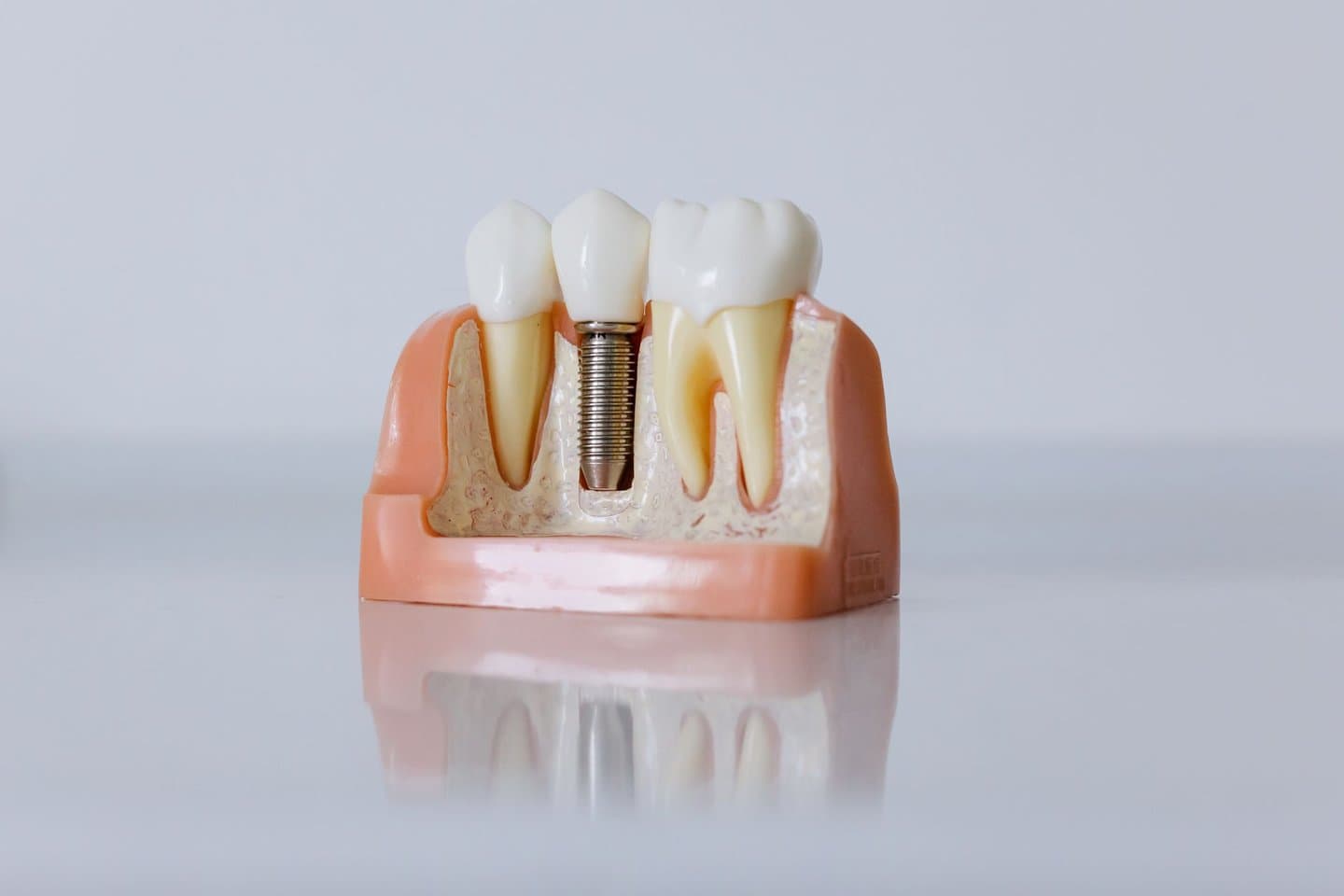
A dental implant is one of the most durable solutions for replacing a missing tooth — but that durability comes from a process that spans several months, not a single appointment. The question I hear most from patients considering an implant is exactly this: how does the process actually work, and what should I expect at each stage?
In this article, I walk through who an implant is generally suitable for, and the stages of treatment from the initial examination through the surgical stage to placing the permanent tooth. Whether it's right for you, and how the process will look in your specific case, can only be determined after an examination and any necessary imaging.
Key Takeaways
- The implant process isn't a single appointment — it's completed over several months, from the initial exam to the permanent tooth.
- Factors like smoking, uncontrolled diabetes, and low bone density can affect the process, but in most cases they don't rule out treatment entirely — they can be addressed with the right planning.
- Fusion with the jawbone (osseointegration) generally takes several months; this varies from person to person.
- No pain is felt during the procedure; mild swelling or sensitivity for a few days afterward is normal.
- Keeping up with oral hygiene and check-up appointments matters for the fusion process to go well.
Who Is a Dental Implant Suitable For, and Who Needs Further Evaluation?
A dental implant is a treatment option considered for adults who have lost one or more teeth and whose jawbone structure is suitable. However, common beliefs that "anyone can get an implant" or, conversely, that "someone with a certain condition can never get an implant" are often exaggerated — the reality is usually somewhere in between.
Smoking is a known factor affecting implant success; heavy smoking can negatively affect the implant's fusion with the bone and increase infection risk. However, this doesn't mean a smoker can't get an implant — it's addressed with the right timing and follow-up.
Uncontrolled diabetes requires a detailed evaluation before treatment; on the other hand, implant treatment can be planned for most diabetic patients whose blood sugar is under control. Low bone density works similarly — patients with significant bone loss need additional evaluation, but with supportive procedures like bone grafting, an implant often becomes possible later on.
In short, in many cases the question isn't "can this be done or not," but "when and how should it be done." This distinction only becomes clear after a comprehensive examination and imaging.
Preparing Beforehand: What Should You Keep in Mind?
Once the decision for an implant is made at the examination, a few simple preparation steps can help before the day of the procedure. Sharing all the medications you take (especially blood thinners) and any chronic health conditions with your dentist is important for accurate planning.
For a standard implant procedure done under local anesthesia, you generally don't need to come on an empty stomach; however, eating a light, low-fat meal beforehand can help keep your blood sugar stable. Wearing comfortable clothing on the day and discussing any concerns with your dentist beforehand can help the process feel more comfortable.
If you smoke, reducing or, if possible, quitting for a few days before and after the procedure can contribute positively to healing — your dentist can offer practical suggestions on this.
1. Examination and Planning
The process begins with an in-person examination and imaging such as an X-ray or CT scan. At this stage, we assess jawbone density, the condition of the gums, and the anatomical structure of the implant site, including the position of nerves and blood vessels.
Panoramic X-rays or 3D CT scans are commonly used as imaging methods; which one is sufficient depends on the complexity of the case, as determined by your dentist. These images form the basis for planning exactly what angle and depth the implant will be placed at in the jawbone.
If bone density is found to be insufficient, this evaluation also clarifies whether an additional preparatory step, such as bone grafting, is needed before the implant. If a bone graft is needed, the graft itself may require several additional months to heal — this extends the overall timeline but ultimately secures the implant's long-term stability. Planning is shaped directly by these findings, which is why it's more accurate to complete this evaluation first rather than giving a single "total duration" at the first exam.
In some cases, in addition to traditional impressions, an intraoral digital scan may also be included in planning; this is a complementary method that helps determine the implant's position more precisely. Which combination of imaging and measurement is needed for your case is determined at the examination.
2. Implant Placement
The implant is surgically placed into the jawbone under local anesthesia. No pain is felt during the procedure; mild swelling or sensitivity for a few days afterward is a normal part of healing.
What's placed at this stage is the titanium implant itself — the permanent tooth that will sit on top isn't attached yet. Titanium has long been the preferred material for implants because it's biocompatible and can fuse directly with bone. Loading the implant permanently before it has fused with the bone can put its success at risk, which is why patience is an important part of this stage.
The length of the procedure depends on the number of implants being placed and the complexity of the case. A single implant procedure is generally quick, while cases requiring multiple implants can take longer. Returning to daily life the same day is usually possible, though avoiding strenuous physical activity that day is recommended.
3. The Osseointegration (Bone Fusion) Period
After the implant is placed, a period of time is needed for it to fuse with the jawbone (osseointegration). This period varies by individual and by the site of the implant, but it generally takes several months. Fusion in the lower jaw generally progresses a bit faster than in the upper jaw, because the lower jawbone is structurally denser.
During this time, keeping up with oral hygiene and attending recommended check-ups is important for healthy fusion. As mentioned earlier, smoking is one of the factors that can negatively affect the fusion process — reducing or quitting smoking during this period can contribute to it going smoothly.
A mild awareness in the implant area from time to time during fusion is normal; however, if you notice increasing pain, redness, or a feeling of movement at the implant site, it's important to reach out to us without waiting for your check-up appointment.
4. Placing the Abutment and Permanent Tooth
Once fusion is complete, a connector piece (abutment) is placed on the implant, followed by the permanent tooth (crown). Before this stage, impressions are taken and the tooth's shape, color, and fit with the neighboring teeth are planned.
Placing the abutment is a minor procedure that generally requires a short healing period. Once this healing is complete, the permanent tooth is fabricated and placed — this is the final and most visible stage of the implant process.
In certain specific cases, using a temporary tooth at an earlier stage may be considered, particularly for front teeth where aesthetics are a concern. However, this is a case-by-case decision and shouldn't be treated as a general rule — its feasibility depends on the implant's stability and position.
Stages at a Glance
To summarize the four stages above:
| Stage | What Happens |
|---|---|
| 1. Examination and Planning | Assessment via X-ray/CT scan; determining whether bone grafting is needed. |
| 2. Implant Placement | Placing the titanium implant into the jawbone under local anesthesia. |
| 3. Osseointegration | A several-month period for the implant to fuse with the jawbone. |
| 4. Abutment and Permanent Tooth | Placing the abutment, followed by the permanent tooth (crown). |
How Does an Implant Differ From Other Tooth Replacement Options?
An implant isn't the only option for a missing tooth; alternatives like a fixed bridge or a removable denture also exist. The key difference between these options is their effect on neighboring teeth and the support they provide to the jawbone.
With a fixed bridge, the healthy teeth on either side of the gap are shaped and capped to serve as anchors for the bridge — this means a permanent intervention on neighboring teeth. An implant, on the other hand, forms an independent root directly in the jawbone, so it doesn't touch neighboring teeth.
A removable denture, being less invasive since it can be taken out, doesn't provide the jawbone with the same direct support as an implant and doesn't offer the same protective effect against bone loss over time. Which option is best for your situation is determined at the examination, taking into account the condition of your jawbone, the health of neighboring teeth, and your overall expectations together.
There's no single "best" answer among these three options — each has situations where it offers an advantage. For example, if the neighboring teeth already have extensive fillings or crowns, a fixed bridge can sometimes be a more practical solution; if the neighboring teeth are completely healthy, an implant is generally the preferred option to avoid touching them. We can discuss this comparison specific to your own dental structure at the examination.
Questions You Might Ask at the Exam
Before deciding on an implant, here are some questions worth asking at the examination to clarify how the process will look in your specific case:
- How many implants do I need, and will they all be placed in the same session?
- Do I need bone grafting, and if so, how does that affect the process?
- Do I have the option of a temporary tooth during the fusion period?
- When can I get back to my daily life or work during healing?
- How often will the check-up appointments be?
- If I smoke or have diabetes, how does that change the process?
Nutrition Tips During Healing
Eating soft foods for the first few days after the procedure helps the implant site heal without being disturbed. Foods that require little or no chewing — yogurt, purees, boiled vegetables, eggs, and soup — are good choices during this period.
It's best to avoid very hot or very hard foods for at least the first week. Adequate fluid intake and balanced nutrition are simple but effective steps that support overall healing. Over time, with your dentist's approval, you can gradually return to your normal diet.
Long-Term Care of Your Implant
An implant requires ongoing care even after the permanent tooth is placed. Daily brushing and flossing are important for keeping the gum tissue around the implant healthy, just as with natural teeth.
Periodic check-up appointments are valuable for monitoring the condition of the gum and bone around the implant — these check-ups allow a potential issue to be caught and addressed while it's still minor. For patients with a teeth-grinding or clenching habit (bruxism), protective measures such as a night guard may be considered to reduce excess load on the implant.
With regular care, an implant can remain functional for many years; however, this timeline varies from person to person, depending on oral hygiene and general health.
What to Watch For Afterward
At every stage of healing, following the recommended oral care routine and keeping up with check-up appointments matters a great deal. In the first few days after the procedure, it's a good idea to be gentle when brushing around the implant site while continuing to clean the surrounding teeth as usual.
Avoiding hard or very hot foods for the first few days helps the tissue at the implant site heal without disturbance. Beyond the expected mild swelling or sensitivity, if you experience worsening pain or excessive swelling, I recommend reaching out to us without delay.
Frequently Asked Questions
Is there an age limit for getting an implant?
For adults whose jawbone has finished developing, there's generally no upper age limit; what actually matters is bone structure and overall health, not age. This is assessed at the examination.
Is an implant suitable for people with a metal allergy?
Titanium is generally well tolerated due to its high biocompatibility; however, if you have a known metal allergy, you should be sure to mention it at the examination.
Can I exercise after getting an implant?
Avoiding strenuous physical activity for the first few days after the procedure is recommended; when you can return to your normal activities is assessed based on your healing.
Can multiple implants be placed at the same time?
When the condition of the jawbone and overall health allow, multiple implants can be planned for the same session; this decision depends on the individual case as assessed at the examination.
Can I get an implant if I'm taking blood thinners?
Taking blood thinners doesn't automatically rule out an implant, but this needs to be assessed with your dentist beforehand, and if necessary, together with the doctor who prescribed the medication.
What happens if an implant fails?
In rare cases, an implant may not fuse sufficiently with the jawbone; in such a case, the implant can be removed and reassessed once the area has healed. This possibility is also why check-up appointments matter.