

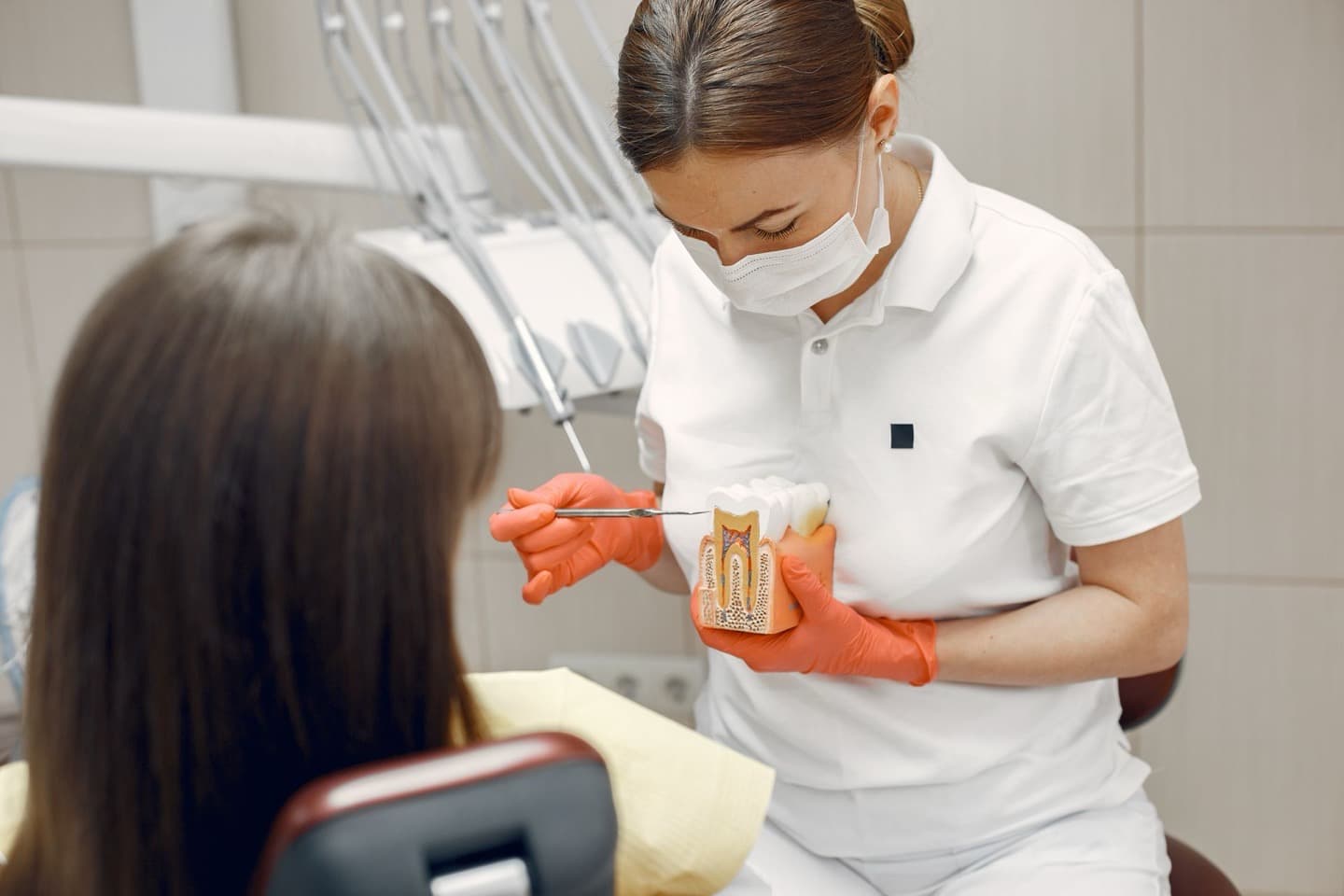
Choosing a dentist isn't just about "the nearest clinic" or "the most convenient appointment slot" — it's the start of a long-term health relationship. But knowing how to make that decision isn't obvious: what should you actually look for, and what should you ask at the first visit?
This guide brings together the concrete criteria the American Dental Association (ADA) publishes for patients, the basic legal rule governing dental practice in Turkey, and a study measuring how much dentists' treatment recommendations actually vary from one another. As a dentist serving the Eyüpsultan, Kemerburgaz, and Göktürk area, this is also one of the questions I hear most often from patients.
Key Takeaways
- According to criteria published by the American Dental Association (ADA), practical convenience (location, hours) matters, but so do communication quality and whether the dentist explains a preventive-care approach.
- Practicing dentistry in Turkey legally requires the dentist to be registered with the Dişhekimleri Odası (dental chamber) in the province where they practice, under Law No. 3224 (Turkish Dental Association Law).
- A study published in the Journal of Dental Research found that when the same teeth were evaluated by multiple dentists, only 22% of treatment recommendations reached full agreement — getting different recommendations from different dentists is the expected pattern, not the exception.
- Asking about emergency protocols, payment transparency, and record-keeping at your first visit helps you make a more informed decision.
- Which treatment is right for you can only be determined after an in-person exam.
Practical Fit: Location, Hours, Accessibility
According to the ADA's patient guidance, keeping up with regular check-ups is easier when the clinic is close to home or work and its hours are convenient (ADA MouthHealthy, "How to Find a Dentist," retrieved 2026-08-24). If you have private dental insurance, it's also worth checking upfront whether the clinic is in-network.
The harder it is to get to an appointment, the harder it becomes to keep up a regular check-up habit — which is why these criteria matter more than they might seem to at first glance.
A Dentist's Registration and Credentials
Practicing dentistry in Turkey legally requires, beyond graduating from a dental faculty, that the dentist be registered with the Dişhekimleri Odası (dental chamber) in the province where they practice. This requirement is set out in Law No. 3224 (Türk Dişhekimleri Birliği Kanunu), and the registry itself is maintained by the Turkish Dental Association under that same law (Law No. 3224, T.C. official legislation portal, retrieved 2026-08-24). The ADA similarly recommends that patients check whether a dentist holds professional-association membership (ADA MouthHealthy, ibid.) — in both countries, the common thread is that the profession is subject to an independent ethical and oversight framework.
Since registration is already a legal precondition, you may not need to verify it yourself as a patient — but knowing this framework exists helps you understand how the profession is regulated.
Communication and Comfort: What Kind of Relationship Should You Expect?
Another point the ADA's patient guidance covers: a welcoming, well-kept office, and a dentist who listens to your past experiences and any dental anxiety you may have (ADA MouthHealthy). In the ADA's own framing, the person you're looking for should act as a trusted advisor who explains preventive care and partners with you in treatment decisions — not just someone who performs a procedure.
How the dentist responds to your questions, whether explanations are clear, and whether the final decision is left to you — these are all concrete signals you can pick up on at the first visit.
Questions Worth Asking at Your First Visit
Four concrete questions for a first visit come straight from the ADA's patient guidance; the point isn't to label a dentist "good" or "bad," but to clarify what you actually need from the decision-making process (ADA MouthHealthy):
- Does the dentist explain how to prevent dental problems?
- How are emergencies outside office hours handled?
- Are there different payment options for treatment costs?
- Is your medical and dental history kept in a permanent record?
How Technology Adds to What an Exam Can Show
Panoramic X-rays, intraoral digital scanning, and digital smile design are imaging and planning tools that have become standard in general dental practice at many clinics. A panoramic X-ray evaluates the entire jaw in a single image, helping catch findings like impacted teeth or bone loss early; intraoral digital scanning creates a 3D model of your teeth without physical impressions; digital smile design lets you preview the likely outcome of a planned cosmetic change before treatment begins.
Technology doesn't make the decision here — it makes the information behind the decision visible. No single tool by itself makes a dentist "better," but together they make the exam process more transparent about what's actually being evaluated and how.
Myth-Busting: Does Every Dentist Recommend the Same Treatment?
Some patients interpret getting different treatment recommendations from different dentists as a mistake or a reason not to trust either one. A study published in the Journal of Dental Research put a number on how common this actually is: when 1,187 teeth across 43 patients were each independently evaluated by an average of 6.6 general practitioners, only 22% of the teeth that received a treatment recommendation got full agreement among the dentists (Bader JD, Shugars DA, "Agreement Among Dentists' Recommendations for Restorative Treatment," Journal of Dental Research, 1993;72(5):891-896, retrieved 2026-08-24).
The numbers make the point plainly: more than one reasonable treatment option can exist for the same clinical finding. Which option fits depends on the patient's bone structure, general health, and personal preference; that's why getting a second opinion isn't a vote of no confidence in the first dentist — it's part of being involved in the decision, and what matters is that the reasoning behind each option is clearly explained to you. Take a missing tooth as an example:
| Option | How It Works | May Suit |
|---|---|---|
| Implant | An artificial root placed in the jawbone, topped with a restoration | Patients with adequate bone density |
| Bridge | Adjacent teeth are used as support to span the gap | Patients whose neighboring teeth already need restoration |
| Removable denture | A removable artificial tooth or teeth | Patients who prefer to avoid surgery or whose bone structure isn't suitable |
Bottom Line: A Priority Order for Choosing a Dentist
Choosing a dentist doesn't come down to one single criterion — practical fit, communication quality, registration and credentials, and the questions you ask at the first visit all factor in together. Which treatment is actually right for you can only be decided after an in-person exam; this article is meant to help you walk into that exam better prepared.
Frequently Asked Questions
I want to switch dentists — is that normal?
Yes — switching dentists or seeking a second opinion when you're not satisfied, or simply want another perspective, is a normal patient right.
Does asking for a second opinion offend the first dentist?
For experienced dentists, a second-opinion request is a routine occurrence — it helps you clarify your own decision.
Is an X-ray always required at a first visit?
That depends on the clinical findings and the dentist's assessment; whether imaging like a panoramic X-ray is needed is decided by the dentist after the exam.