

What Is Digital Smile Analysis, and When Is It Useful?
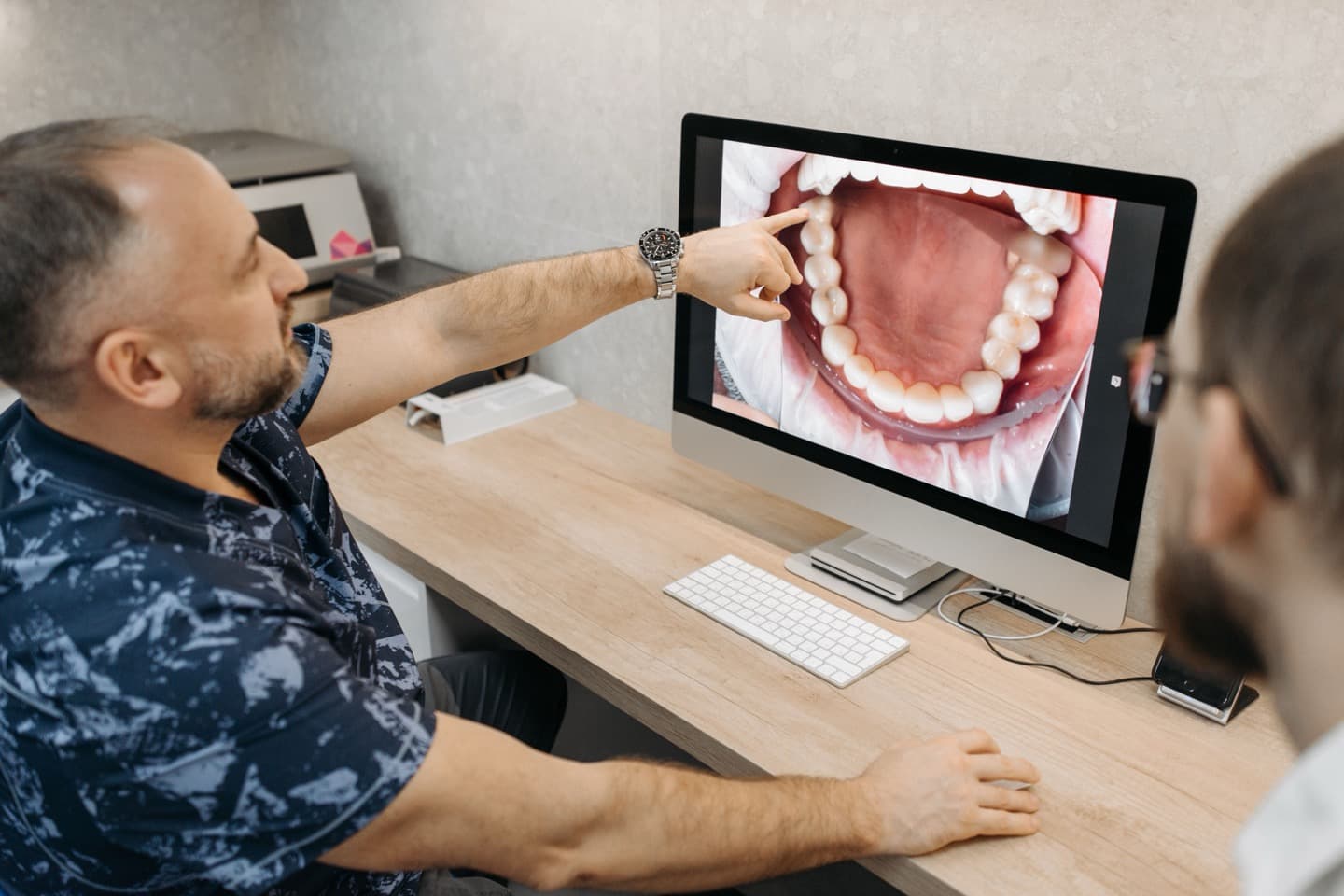
August 24, 2026 · Dentist Büşra KayanDuring an exam, a dentist may turn the screen toward you and show a digital image of your teeth, sometimes with a simulation of a possible change. At that moment, most patients have the same two questions: what exactly is this for, and will I actually end up looking like that? We call this "digital smile analysis" — but there's still a lot of confusion about what it actually is.
In this article, I explain what digital smile analysis really is, how it differs from smile design, when it's genuinely useful, and what to expect during the process. Most importantly, I'm upfront about how the simulation you see on screen relates to your actual result.
Key Takeaways
- Digital smile analysis isn't a treatment on its own — it's a planning step that records your current teeth and smile digitally so you can visually evaluate possible treatment options.
- A 2025 systematic review found that the digital smile design process, which is built around the same scanning and simulation step described here, was consistently linked to better patient satisfaction and dentist-patient communication — though the evidence base is small and mostly limited to smaller studies.
- A 2024 meta-analysis found that intraoral digital scanners meet clinically acceptable accuracy thresholds, though methodological differences between studies were substantial.
- The simulation you see on screen is a prediction, not a guarantee — your actual result depends on the treatment applied, the real structure of your teeth, gums, and bone, and your dentist's clinical judgment.
- Many treatment decisions — fillings, veneers, crowns, whitening, and full smile design — can be supported by this analysis beforehand.
What Exactly Is Digital Smile Analysis?
Digital smile analysis uses an intraoral digital scanner and photography to record and examine your teeth, gums, and overall smile in detail. No physical impression is taken; a small handheld scanner is moved over the teeth, and a 3D digital model is built within a few minutes.
The simulation you see on screen isn't a random or purely promotional image. Digital smile design software used in this field was rated above the acceptable usability threshold by clinicians in a 2025 usability study published in Dentistry Journal (Macris et al., Dentistry Journal, 2025, DOI: 10.3390/dj13090418, accessed 2026-08-24). That doesn't say anything about how "good" any single result looks — it just shows this is mature, tested technology, not a gimmick.
One thing worth clarifying here: digital smile analysis is not a treatment. It's not a procedure applied to your teeth like a filling, veneer, or whitening — it's an evaluation and planning step that records your current situation so you and your dentist can review possible treatment options visually together. Which treatment is actually right for you is determined afterward, during a clinical exam.
How Is Digital Smile Analysis Different From Smile Design?
These two terms get mixed up often, but the difference is clear. Digital smile analysis is a single evaluation step — recording your current teeth and simulating a possible change digitally, usually in 20-30 minutes. Smile design is a broader process: it looks at tooth color, shape, size, alignment, and how your gums contribute to your smile as a whole, and plans one or more treatments together — fillings, veneers, crowns, or whitening — if needed.
In short, digital smile analysis is often the first step of the smile design process, but it can also stand on its own — for example, if you're simply curious how a specific change would look and haven't decided on a broader treatment yet. I covered the stages of the smile design process in more detail in "How Does the Smile Design Process Work?"
When Is It Genuinely Useful?
Digital smile analysis is worth considering if you're not happy with your tooth color, shape, alignment, or gum appearance, and you want to review your options visually before deciding on treatment. If you're weighing a filling, veneers, crowns, whitening, or a full smile design, this analysis can give the decision a concrete reference point.
A 2025 systematic review in Cureus looked at seven studies on the topic: one randomized controlled trial, several observational studies, and one case report. The review found that the digital smile design process — which, at its core, is built around exactly the scanning and simulation step described here — was consistently linked to better patient satisfaction, treatment acceptance, and dentist-patient communication (Alwabel et al., Cureus, 2025, DOI: 10.7759/cureus.98084, accessed 2026-08-24).
Two caveats matter here. The number of included studies is small, and several are small-scale, so this finding is better read as a positive trend than a firm rule. And the review's focus is the broader smile design process that this analysis is part of, so the findings don't automatically transfer to a single, standalone analysis session — though since both rely on the same core mechanism (visual preview and communication), it's still a relevant signal.
This kind of analysis is also an option if you haven't decided on treatment yet and just want a partial answer to "how would this change actually look on me" — it doesn't commit you to anything.
The Process: From Scan to Simulation
The process starts with an intraoral digital scan of your teeth and gums. A small scanning tip is moved around inside the mouth; it's painless and doesn't involve the uncomfortable impression material used for physical molds.
You might reasonably wonder how accurate these scanners actually are. A 2024 systematic review and meta-analysis in the Journal of Clinical Medicine, evaluating nine clinical studies, found the average difference between intraoral scans and conventional impressions was about 152 microns — within the clinically acceptable accuracy threshold. The researchers also noted substantial methodological variation between studies, with results depending on scanner type and scanning technique (Pesce et al., Journal of Clinical Medicine, 2024, DOI: 10.3390/jcm14010071, accessed 2026-08-24).
Once the scan is done, photos capture your smile and facial features. That data is then used to simulate possible treatment outcomes digitally, and the results are reviewed with you on screen. The whole process usually fits into a single visit of about 20-30 minutes and requires no recovery time.
Does the Simulation Match My Actual Result Exactly?
No — and this is the point I try to make clearest to my patients. A digital simulation is a prediction of a possible outcome, not a guarantee. What you see on screen is an estimate based on your current data; your actual result depends on the treatment chosen, the real structure of your teeth and gums, your bone condition, and the clinical circumstances at the time of treatment.
This distinction matters so you're not caught off guard later: treat the simulation as a reference point that helps you clarify your decision, not a "guaranteed photo" of the outcome. What's actually suitable for you, and what result you can realistically expect, only becomes clear after a full exam and clinical evaluation.
Treatment Decisions This Analysis Can Support
Digital smile analysis isn't tied to one specific treatment — it can support planning across several esthetic and restorative decisions:
| Treatment | What the Analysis Helps With |
|---|---|
| Composite filling | Previewing how the color and shape will match the rest of the tooth |
| Veneers | Visualizing how a possible change in tooth size or shape affects the smile |
| Crowns | Previewing the overall smile appearance after the crown is placed |
| Teeth whitening | Comparing the targeted shade change against your current tooth color |
| Smile design | Evaluating how several treatments together might shape the final result |
Preparing for Your Appointment
You don't need any special preparation for digital smile analysis. That said, bringing any previous dental X-rays or treatment records helps your dentist's evaluation.
Before your appointment, jotting down what specifically bothers you about your smile — a tooth's color, alignment, or how your gums look — makes it easier to focus on the right questions during the analysis. At Neon Klinik in Kemerburgaz, this analysis is offered as a natural part of the comprehensive first exam for patients who want it.
A Good Starting Point for an Informed Decision
Digital smile analysis is a painless, single-visit evaluation tool that can help you clarify a decision if you're considering a change to your smile. But remember: the simulation on screen is a prediction, not a guarantee of your actual result.
If you're weighing several changes to your smile together, take a look at the article where I cover the smile design process this analysis usually kicks off. The only reliable way to find out what's actually right for you is through an exam.
Frequently Asked Questions
Is digital smile analysis painful?
No, it's a completely painless evaluation — it doesn't involve the uncomfortable impression material used for physical molds.
How long does the analysis take?
It's usually completed in a single visit, in about 20-30 minutes.
Do I start treatment right after the analysis?
No, which treatment to apply and when is decided separately, together with you, after the analysis.
Does the simulation I see match my actual result after treatment exactly?
No, the simulation is a prediction — your actual result can vary based on the treatment applied and the real structure of your teeth and gums.
Does having this analysis commit me to treatment?
No, the analysis doesn't commit you to any treatment — it simply lets you review your options visually.
Are digital smile analysis and smile design the same thing?
No — analysis is a single evaluation step, while smile design is a broader planning process that brings several treatments together.
Sources
- Alwabel LK, Alabduljabar WM, Alawfi LK, et al. — "Digital Smile Design and Patient-Centered Outcomes in Esthetic Restorative Dentistry: A Systematic Review" (Cureus, 2025)
- Pesce P, Nicolini P, Caponio VCA, et al. — "Accuracy of Full-Arch Intraoral Scans Versus Conventional Impression: A Systematic Review with a Meta-Analysis" (Journal of Clinical Medicine, 2024)
- Macris A, Drafta S, Martiniuc Ș, Petre AE — "Comparative Usability Evaluation of Three Digital Smile Design Software Tools Using the System Usability Scale" (Dentistry Journal, 2025)