

The Lasting Aesthetic Difference with Composite Bonding
August 25, 2026 · Dentist Büşra KayanComposite bonding can be completed in a single visit and can make a real aesthetic difference with almost no change to the tooth's structure. But when you hear the word "lasting," the question that comes to mind is: how long does that difference actually hold up? The "before-and-after" photos shared widely on social media usually leave that question unanswered.
In this article, I explain how composite bonding creates an aesthetic change, how long that change actually lasts, what affects its durability, and how it compares to veneers or crowns in terms of longevity — all with evidence-based sources.
Key Takeaways
- A 2026 umbrella review in the Journal of Esthetic and Restorative Dentistry (16 systematic reviews, over 15,000 restorations) found that conventional composite filling/bonding materials have a 5-year survival rate above 90%.
- According to the same review, the biggest factor determining durability isn't the material itself — it's the bonding (adhesive) protocol used.
- Unlike veneers, composite bonding doesn't require enamel removal, according to the ADA — making it a relatively more reversible option.
- "Lasting" here doesn't mean "never changing"; discoloration, small chips, or edge wear can appear over time, and periodic maintenance or touch-ups may be needed.
- Compared to veneers or zirconia crowns, bonding is less invasive, but it offers a different long-term durability profile.
What Is Composite Bonding, and What Does It Change?
According to the ADA's patient resource, bonding is a procedure where the dentist attaches material directly to the tooth; the natural enamel and dentin are fused together with bonding materials like porcelain or composite resin to create a strong, natural-looking structure.
Composite bonding is used to improve the natural appearance of teeth with small chips, cracks, gaps, or mild shape irregularities. According to the ADA, there's an important difference from veneers: bonding doesn't require removing tooth enamel.
How Does Bonding Create an Aesthetic Difference?
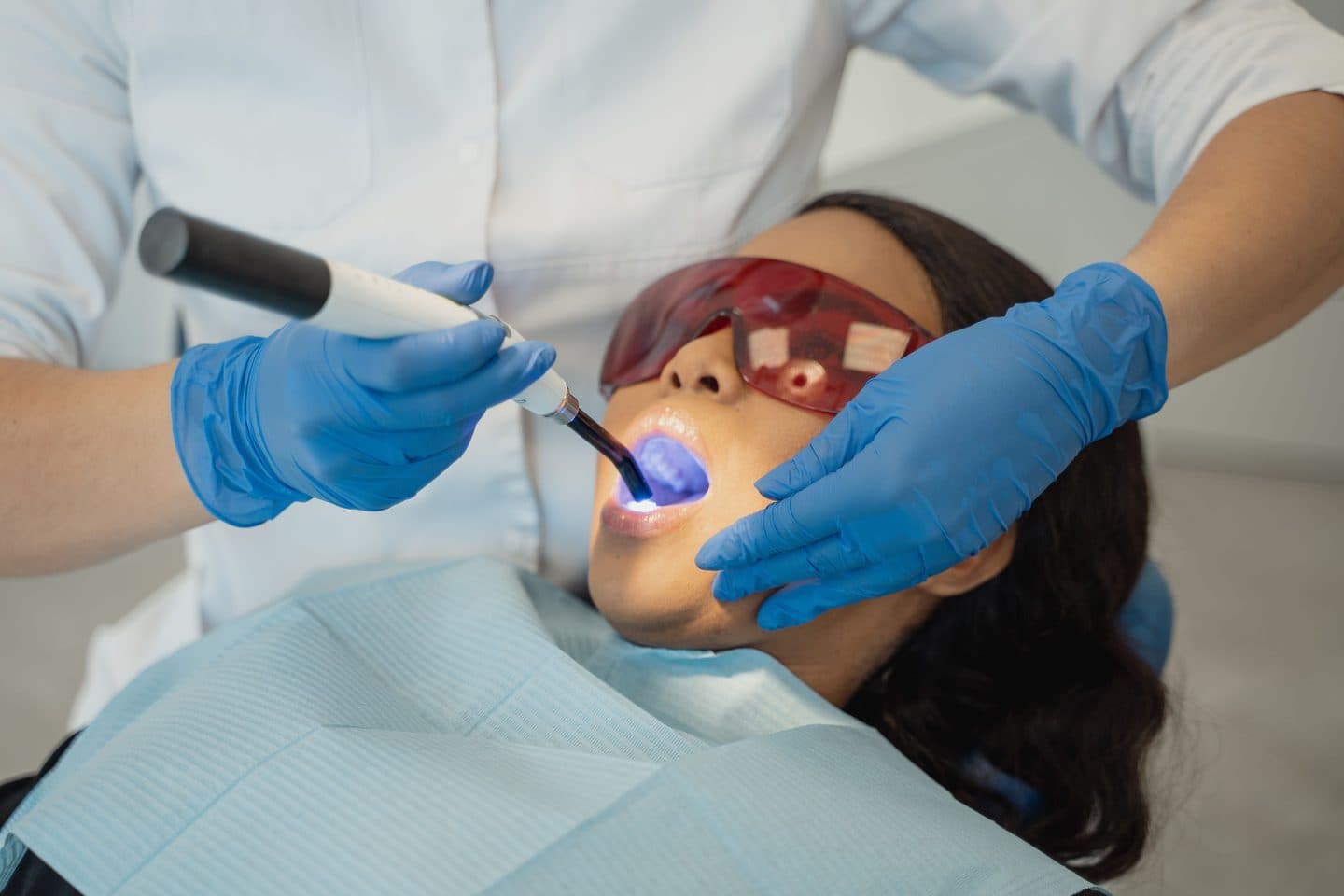
During the procedure, a putty-like, tooth-colored composite resin is applied to the tooth and shaped by hand to the desired form. It's then hardened with a special light (a curing light) and finally polished to resemble the natural tooth surface.
This process is usually completed in a single visit and requires no recovery time — you can return to normal activities right after the appointment.
How Long Does This Difference Actually Last?
An honest answer matters here: a 2026 umbrella review in the Journal of Esthetic and Restorative Dentistry brought together 16 systematic reviews published between 2012 and 2025, covering over 15,000 restorations. The result: conventional composite materials, especially when used with multi-step adhesive systems, showed a 5-year survival rate above 90% (Fernández E, et al., Journal of Esthetic and Restorative Dentistry, 2026;38(2):307-324).
That doesn't mean "bonding stays exactly the same forever" — a 90% survival rate also means a small remaining share may need some form of maintenance, repair, or renewal within 5 years. It's more accurate to read "lasting" here as "holds up for a long time, but needs monitoring and care over time" rather than "permanent and unchanging."
Do All Composite Types Perform the Same?
No, and this is an important finding from the review: conventional composites and bulk-fill resins (applied in a single thick layer) showed similar, favorable short-to-medium-term results, while ormocer-based composites showed a notably higher failure rate (12.1%) — mainly due to breakdown at the margins.
This shows that "composite bonding" doesn't refer to a single material — the specific material type used is a factor that directly affects the outcome. Which material fits your situation is something to evaluate during an exam.
What Affects Its Durability?
According to the same review, one of the most critical factors for durability isn't the material itself — it's the bonding (adhesive) protocol used during application. In other words, the same composite material can produce very different results depending on the technique.
Patient-, dentist-, material-, and tooth-related factors all play a role together — for example, a patient's caries risk, oral care habits, and conditions like bruxism (clenching/grinding) can all affect how long bonding lasts.
Is There a Risk of Discoloration?
Composite materials are less stain-resistant than ceramic materials like porcelain. Over time, especially with frequent consumption of staining beverages like tea, coffee, or red wine, some mild discoloration can appear.
Since this can throw off the match with neighboring natural teeth, it's worth scheduling a check-up once discoloration becomes noticeable.
How Does Bonding's Durability Compare to Veneers and Zirconia Crowns?
Placing the evidence-based survival data for all three treatments side by side is a useful framework — but comparing these numbers directly needs care, since different studies use different follow-up periods and failure criteria:
| Treatment | Reported Survival | Tooth Reduction |
|---|---|---|
| Composite bonding | Above 90% at 5 years | Usually none or minimal |
| Porcelain veneer | 95.5% at 10 years | Usually some enamel removal |
| Zirconia crown (tooth-supported) | 91.2% at 5 years | More extensive reduction |
Who Is Bonding a Good Fit For?
Bonding is typically considered for small, limited cosmetic concerns: a small chip on a single tooth, a minor gap, or a slight shape irregularity, for example. When the change needed is larger or spans multiple teeth, a different option like a veneer may be a better fit — I covered this in more detail in "What Are Dental Veneers, and Who Are They For?"
Because bonding doesn't require enamel removal, it's especially appealing for a "try the least invasive option first" approach — if the result isn't enough, a more extensive option like a veneer remains available down the road.
When Is Touch-Up or Repair Needed?
One advantage of bonding is that repairs, when needed, are relatively easy — a small chip or discoloration can often be corrected by working on just that localized area, without replacing the whole tooth's restoration. This is a flexibility that isn't usually available with veneers, especially porcelain ones.
Regular check-ups let any issue with bonding be caught early and corrected with a small intervention, rather than letting it develop into a bigger problem.
Bottom Line
Composite bonding is an evidence-backed option that can create a real aesthetic difference in a single visit with minimal intervention. But the key to setting realistic expectations is understanding "lasting" as "holds up for a long time but may need monitoring and occasional renewal over time," not as "maintenance-free and unchanging forever." Whether bonding, a veneer, or another option is right for you only becomes clear through an exam.
Frequently Asked Questions
How many years does composite bonding last?
According to an evidence-based umbrella review, conventional composite materials have a 5-year survival rate above 90% — though this can vary based on your oral care and habits.
Is bonding as durable as a veneer?
A direct comparison is difficult since different studies use different follow-up periods; but in general, veneers (especially porcelain) are considered a longer-term option, while bonding offers a less invasive alternative.
What happens if bonding chips — can it be repaired?
Yes, one advantage of bonding is that small damage can often be repaired by working on just that localized area, without replacing the whole restoration.
Does the color of bonding change over time?
Yes, composite materials are less stain-resistant than porcelain; frequent consumption of staining beverages can lead to mild discoloration over time.
What should I watch out for after getting bonding?
Regular oral care, limiting staining beverages, and routine check-ups all help extend how long bonding lasts.
Is bonding a permanent solution or a temporary one?
It falls somewhere in between: it isn't a one-time-only procedure, but it also isn't a result that "never changes" — it's a method that holds up for a long time but may need monitoring and occasional small touch-ups over time.
Do all composite materials last the same amount of time?
No; according to an evidence-based review, conventional composites and bulk-fill resins showed similar, favorable results, while some alternative material types (such as ormocer-based composites) showed a notably higher failure rate.
I have bruxism — can I still get bonding?
Bruxism can negatively affect how long bonding lasts; in this situation, it's recommended to first evaluate the bruxism and, if needed, plan it alongside a protective approach such as a night guard.