

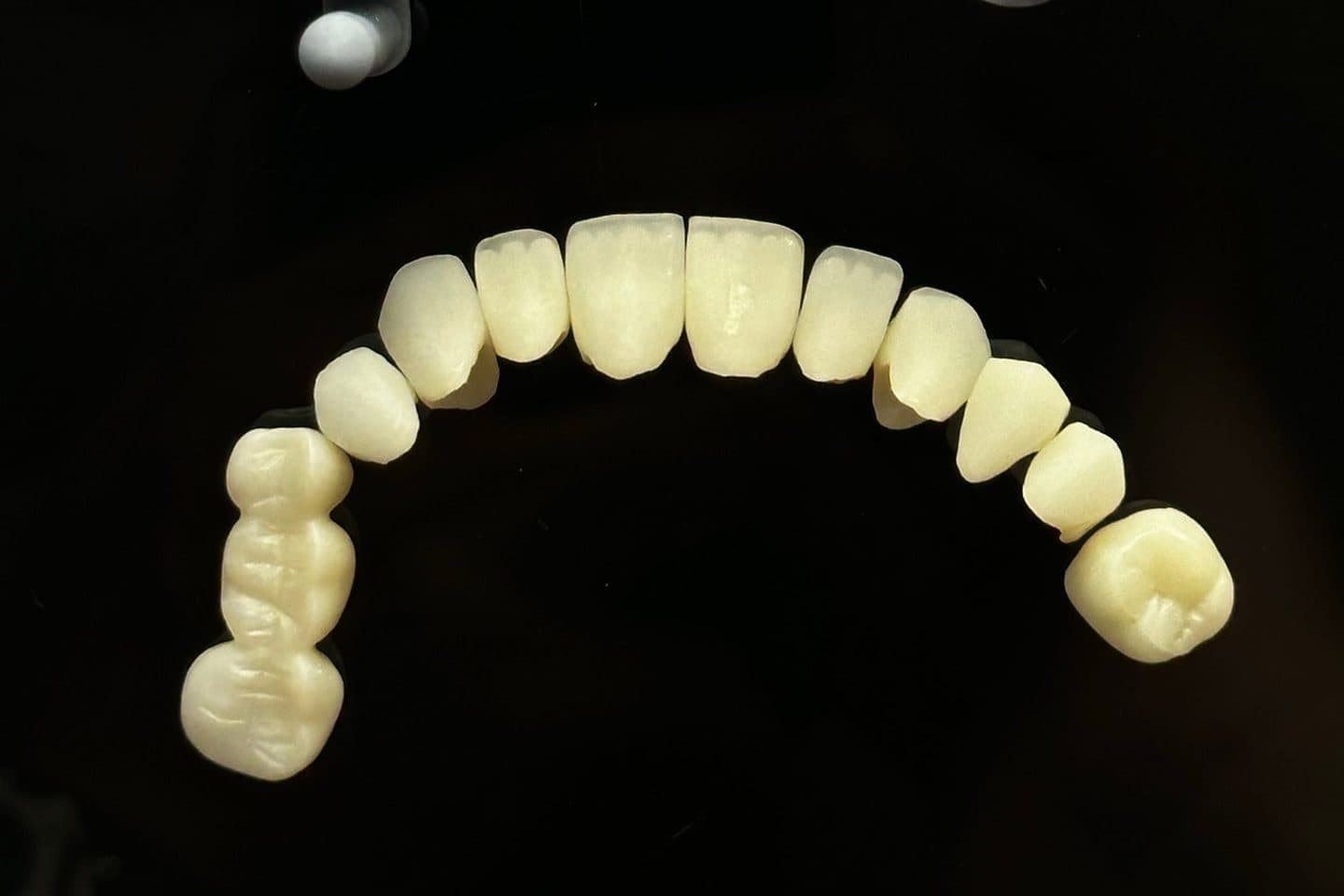
"Should I get a zirconia crown or a veneer?" — these two treatments get confused often, because both use a new outer surface to redefine how a tooth looks. But the difference between them isn't just material; they're fundamentally different in scope, purpose, and the type of tooth they're used on.
In this article, I explain the core differences between a zirconia crown and a dental veneer, when each is typically chosen, and what the evidence says about how durable each one is.
Key Takeaways
- A zirconia crown wraps around the entire tooth; a veneer covers only the front surface — that's the most fundamental difference.
- A 2021 ADA survey found dentists most often use zirconia (98%) for posterior crowns, while it's used far less often for veneers.
- Zirconia crowns are typically chosen for structurally weakened teeth (for example, after root canal treatment), while veneers are primarily used on structurally healthy teeth that need a cosmetic improvement.
- A 2018 systematic review in Clinical Oral Implants Research found a 5-year survival rate of 91.2% for tooth-supported zirconia crowns.
- The two treatments aren't interchangeable — which one fits depends on the tooth's current structural condition, and that only becomes clear during an exam.
The Core Difference: Scope and Purpose
A zirconia crown is a ceramic shell that wraps around the entire tooth — the tooth is essentially "hidden" underneath it. A veneer, by contrast, is a thin covering applied only to the front (visible) surface of the tooth; the back and side surfaces stay as they are.
That difference also shapes the purpose: a zirconia crown provides both structural reinforcement and aesthetics, while a veneer is primarily a cosmetic solution. I covered veneers in more detail in "What Are Dental Veneers, and Who Are They For?"
When Is a Zirconia Crown Typically Chosen?
A zirconia crown is typically chosen to restore structural integrity in teeth that have suffered significant material loss, had root canal treatment, or are cracked or fractured. According to the ADA's Clinical Evaluators Panel survey, 98% of the 277 responding dentists reported using zirconia for posterior crowns, 61% for anterior crowns; 99% reported using zirconia on natural teeth and 76% on implant-supported restorations (Lawson NC, et al., The Journal of the American Dental Association, 2021;152(1):80-81).
These numbers show that dentists primarily see zirconia as a structural solution — for a structurally healthy tooth with a purely cosmetic concern, zirconia crowns typically aren't the first choice.
When Is a Veneer Typically Chosen?
A veneer is typically chosen when the tooth's structure is healthy but its appearance (color, shape, minor irregularity) is what bothers the patient. According to the same ADA survey, zirconia is used quite rarely for veneers — confirming that dentists see zirconia primarily as a crown material, while other materials (porcelain, composite) are far more commonly chosen for veneers.
So while the concept of a "zirconia veneer" exists in the literature, in practice it isn't a common choice among dentists — which underscores once more that these two treatments serve genuinely different clinical needs.
The Difference in Tooth Reduction
Because a zirconia crown needs to wrap around the entire tooth, it typically requires a noticeable amount of reduction all around the tooth. A veneer, since it only covers the front surface (especially when composite is chosen), can require less reduction — sometimes almost none.
This is a meaningful factor in your decision: a zirconia crown is a more extensive intervention, while a veneer (especially composite) offers a relatively more conservative approach.
How much of the tooth is reduced also affects how reversible the decision is: once a tooth is fully reduced, it can never return to its original natural state — another point worth weighing when choosing between the two.
The Difference in Appearance and Light Transmission
Because zirconia has a light transmission close to natural enamel, modern (monolithic) zirconia in particular can achieve a quite natural look. But since it wraps around the entire tooth, getting the shade match with neighboring natural teeth right matters especially.
A veneer, thanks to its thin profile, can let some light reflect through the natural tooth structure beneath it — which in some cases can create a more "lively" appearance. Which material gives a more natural result for your tooth depends on your tooth color and the condition of your neighboring teeth.
Is There a Difference in Aftercare?
Day-to-day care relies on similar basic rules for both treatments: regular brushing, flossing, and routine check-ups. But there are some practical differences — with a zirconia crown, the main thing to watch is keeping the margin where the crown meets the gum clean, since that area can be more prone to gum inflammation.
With veneers, especially composite ones, avoiding hard foods and limiting staining beverages matters — I covered these points in more detail in "What Are Dental Veneers, and Who Are They For?"
Comparison Table
Here's how the two treatments compare side by side:
| Feature | Zirconia Crown | Veneer |
|---|---|---|
| Coverage | Wraps around the entire tooth | Covers only the front surface |
| Primary purpose | Structural reinforcement + aesthetics | Primarily aesthetics |
| Typical use case | Root-canal-treated, cracked, or significantly worn teeth | Structurally healthy teeth with a cosmetic concern |
| Tooth reduction | Usually more extensive | Less (can be minimal with composite) |
| Most common ADA-survey use | Posterior crowns (98%) | — |
How Durable Are They? What Does the Evidence Say?
A 2018 systematic review in Clinical Oral Implants Research found a 5-year survival rate of 91.2% (95% CI: 82.8%-95.6%) for tooth-supported (not implant-supported) zirconia crowns — comparable to traditional metal-ceramic crowns (Pjetursson BE, et al., Clinical Oral Implants Research, 2018;29(Suppl 16):199-214).
On the veneer side, as I shared in "What Are Dental Veneers, and Who Are They For?", a 2021 review in the Journal of Clinical Medicine found a 95.5% 10-year survival rate for porcelain veneers. But comparing these two numbers directly would be misleading — they come from different follow-up periods (5 years vs. 10), different tooth groups, and different failure criteria. What actually matters is that both treatments have a strong evidence base in the right case.
Which One Is Right for You?
As a general rule of thumb:
- If your tooth has had root canal treatment, is cracked, or has noticeable material loss: a zirconia crown is usually the more suitable option
- If your tooth is structurally healthy but you're bothered by its color, shape, or minor irregularity: a veneer is usually the more suitable option
- If different teeth have different needs: a zirconia crown and veneers can be used together across different teeth
Can Both Be Used Together?
Yes — this is a common misconception. A zirconia crown and veneers aren't mutually exclusive options; in a smile design plan, teeth with different structural issues can receive different solutions. For example, a root-canal-treated back tooth might get a zirconia crown, while a structurally healthy front tooth with a color issue might be addressed with a veneer.
Which approach fits which tooth is determined during an exam that evaluates your teeth individually.
Bottom Line
A zirconia crown and a veneer aren't competing options with one "which is better" answer — they're two different tools serving different clinical needs. A zirconia crown resolves a structural problem, while a veneer primarily delivers a cosmetic improvement. The only way to clarify which one (or which combination) is right for your teeth is through an exam.
Frequently Asked Questions
Is a zirconia crown more durable than a veneer?
A direct comparison is difficult since different studies use different follow-up periods; but both have a strong evidence base in the right case. Zirconia is designed as a solution for more structurally demanding cases.
Which is right for a tooth that's had root canal treatment?
A zirconia crown is usually preferred, since root-canal-treated teeth can be structurally weakened, and the full-coverage protection a crown provides is generally more suitable in that situation.
Can both be used together?
Yes, they can be combined across different teeth based on individual needs — this is a common approach, especially in smile design plans.
Does a zirconia crown always require tooth reduction?
Generally yes, since space needs to be created for the crown to wrap around the entire tooth; the extent of reduction depends on the tooth's condition.
Which one looks more natural?
Both can look quite natural when done well; zirconia's light transmission is close to natural enamel, and a veneer's thin profile can also preserve a natural tooth appearance.
How is the decision made?
It's made during an exam, weighing your tooth's structural condition (root canal history, cracks, material loss) together with your goals (purely cosmetic, or also needing reinforcement).
Does gum care need extra attention after a zirconia crown?
Yes, the margin where the crown meets the gum needs regular, careful cleaning; neglecting this area can increase the risk of gum inflammation.
Sources
- Lawson NC, Frazier K, Bedran-Russo AK, Khajotia S, Park J, Urquhart O. "Zirconia Restorations: An American Dental Association Clinical Evaluators Panel Survey." The Journal of the American Dental Association, 2021;152(1):80-81
- Pjetursson BE, Valente NA, Strasding M, Zwahlen M, Liu S, Sailer I. "A Systematic Review of the Survival and Complication Rates of Zirconia-Ceramic and Metal-Ceramic Single Crowns." Clinical Oral Implants Research, 2018;29(Suppl 16):199-214