

When Is Wisdom Tooth Extraction Necessary, and When Isn't It?
August 24, 2026 · Dentist Büşra KayanWisdom tooth extraction has a reputation: it feels like something everyone eventually has done. A good number of my patients ask "do I need to get this removed" even when they have no symptoms at all — sometimes because of a friend's difficult experience, sometimes because of conflicting information they've read online. The truth is, there isn't even full agreement on this within international dentistry.
In this article, I explain the concrete clinical findings that actually make wisdom tooth extraction necessary, the situations where it can be postponed or may not be needed at all, and how the decision process works. If you're wondering about recovery after extraction, I've covered that in a separate article — here I'm focused solely on helping you answer "is this actually necessary or not."
Key Takeaways
- NICE, the UK's national guidance body (2000, reviewed again in 2024), doesn't recommend routine removal of impacted wisdom teeth that show no evidence of disease — it limits extraction to specific pathological findings.
- A 2020 Cochrane review found the evidence comparing removal versus retention of asymptomatic, disease-free impacted wisdom teeth to be of "very low certainty," with insufficient evidence to either support or refute routine preventive extraction.
- AAOMS, the US-based association, treats impacted teeth as "potentially pathologic" and advocates a more proactive approach for teeth at risk of disease — so international guidelines genuinely disagree here.
- Concrete findings that make extraction necessary include unrestorable decay, non-treatable periapical infection, recurrent or severe pericoronitis, abscess, and root resorption in the adjacent tooth.
- For problem-free, well-positioned, or asymptomatic teeth, monitoring with periodic X-rays instead of extraction is also a clinically valid option.
- Contrary to the common belief that extraction prevents lower front teeth from crowding, the one study that directly tested this found no evidence extraction had that effect.
- Only an exam and X-ray imaging can determine the right decision for your specific case.
Why International Guidelines Disagree
Wisdom tooth extraction is one of the most debated topics in dentistry — and not because of bad practice, but because guidelines from different countries genuinely reach different conclusions. NICE, the UK's national clinical guidance body, takes a clear stance in the guidance it first published in 2000 and reviewed again in 2024: routine, preventive removal of problem-free impacted wisdom teeth with no evidence of disease is not recommended (NICE, "Guidance on the Extraction of Wisdom Teeth", TA1, accessed 2026-08-24).
AAOMS, the US-based American Association of Oral and Maxillofacial Surgeons, takes the opposite framing: it describes impacted wisdom teeth as "potentially pathologic" and advocates a more proactive surgical approach for teeth at risk of disease. Given that both guidelines are looking at largely the same body of research, this disagreement really reflects how limited the underlying evidence itself is.
A 2020 Cochrane review confirms that uncertainty: it rates the evidence comparing removal versus retention of asymptomatic, disease-free impacted wisdom teeth as "very low certainty," and states there isn't enough data to either confidently support or refute routine preventive extraction (Ghaeminia et al., Cochrane Database of Systematic Reviews, 2020, DOI: 10.1002/14651858.CD003879.pub5, accessed 2026-08-24). In short: there's no blanket rule that "everyone should" or "no one should" get their wisdom teeth out — the decision depends on your specific tooth.
Lined up side by side, the three sources look like this:
| Source | General Position |
|---|---|
| NICE (UK, 2000/2024) | Doesn't recommend routine/preventive extraction with no disease evidence; limits removal to specific pathological findings |
| Cochrane review (2020) | Insufficient evidence to support or refute preventive extraction in asymptomatic teeth (evidence certainty: very low) |
| AAOMS (US) | Treats impacted teeth as "potentially pathologic"; advocates a more proactive surgical approach for teeth at risk of disease |
What Concrete Findings Make Extraction Necessary?
Even though the guidelines diverge on the overall approach, they largely agree on when extraction is warranted. NICE limits surgical removal to these findings:
- Unrestorable decay
- Non-treatable periapical (root-tip) infection
- Serious infections such as cellulitis, abscess, or osteomyelitis
- Internal or external root resorption of the tooth itself or an adjacent tooth
- Tooth fracture
- Cyst or tumor development in the tooth follicle
- The tooth blocking a separate necessary surgical procedure (e.g., jaw surgery)
Why These Specific Findings Matter
If one or more of these findings is present, extraction is usually a clear treatment choice — because here the risk comes from leaving the tooth as it is, not from the extraction itself.
This list can sound abstract, so let me make a couple of items more concrete. "Unrestorable decay" means decay that's progressed too far for a filling to fix — wisdom teeth sit at the very back of the mouth, and because they're often partially impacted, they're hard to clean with daily brushing, which raises decay risk. "Cyst development in the tooth follicle" is rare but serious: a fluid-filled sac can form around an impacted tooth and gradually expand within the jawbone — which is exactly why impacted teeth are worth monitoring with periodic X-rays even when they seem problem-free.
Does Pericoronitis Always Mean Extraction?
Pericoronitis is inflammation of the gum tissue over an impacted or partially impacted wisdom tooth, and it's one of the most common complaints associated with these teeth. But there's an important distinction here: a mild, first-time episode of pericoronitis isn't necessarily enough on its own to justify extraction.
That's because first episodes are often manageable with local cleaning and, if needed, short-term treatment. But if the episode recurs, is severe, or tends to spread to surrounding tissue — the jaw or neck, for example — that strongly supports a decision to extract. Figuring out which category your episode falls into requires an exam.
Situations Where Extraction May Not Be Necessary
On the other side of the coin are wisdom teeth causing no symptoms at all, with no evidence of disease on X-ray. NICE is clear here: removing this kind of tooth purely on the assumption that it "might cause problems later" isn't recommended.
The "very low certainty" evidence in the Cochrane review points to a possible small increase in long-term periodontitis risk at the adjacent second molar when an asymptomatic impacted tooth is retained — but that association isn't strong or definitive enough to justify routine preventive extraction. So "not extracting" is a clinically defensible option for a problem-free wisdom tooth; what matters is not forgetting about the tooth entirely, but monitoring it at regular intervals.
A wisdom tooth that has erupted into a good position, makes proper contact with its opposing tooth, and can be cleaned with daily brushing and flossing similarly falls into the "extraction isn't required" category.
Does Extraction Prevent Lower Front Teeth From Crowding?
I hear this reasoning from patients often: "I need my wisdom teeth out so my lower front teeth don't get crowded." It's a widespread belief — but the evidence doesn't support it.
The Cochrane review I mentioned above looked at the one randomized controlled trial that directly tested this question: a study in adolescents comparing removal versus retention of impacted lower wisdom teeth, measuring only the effect on late lower incisor crowding. The result is clear: this study, which carries a high risk of bias, found no evidence that extraction had an effect on lower front tooth crowding over a 5-year follow-up (Ghaeminia et al., Cochrane Database of Systematic Reviews, 2020, DOI: 10.1002/14651858.CD003879.pub5, accessed 2026-08-24).
There are two important caveats here: the evidence rests on a single study, and that study's methodology isn't strong. But since this is the best evidence available, "preventing crowding" shouldn't be presented on its own as a reason for extraction. If you're concerned about the alignment of your teeth, that's better evaluated in an orthodontic consultation.
The Decision Process: What Gets Evaluated During the Exam
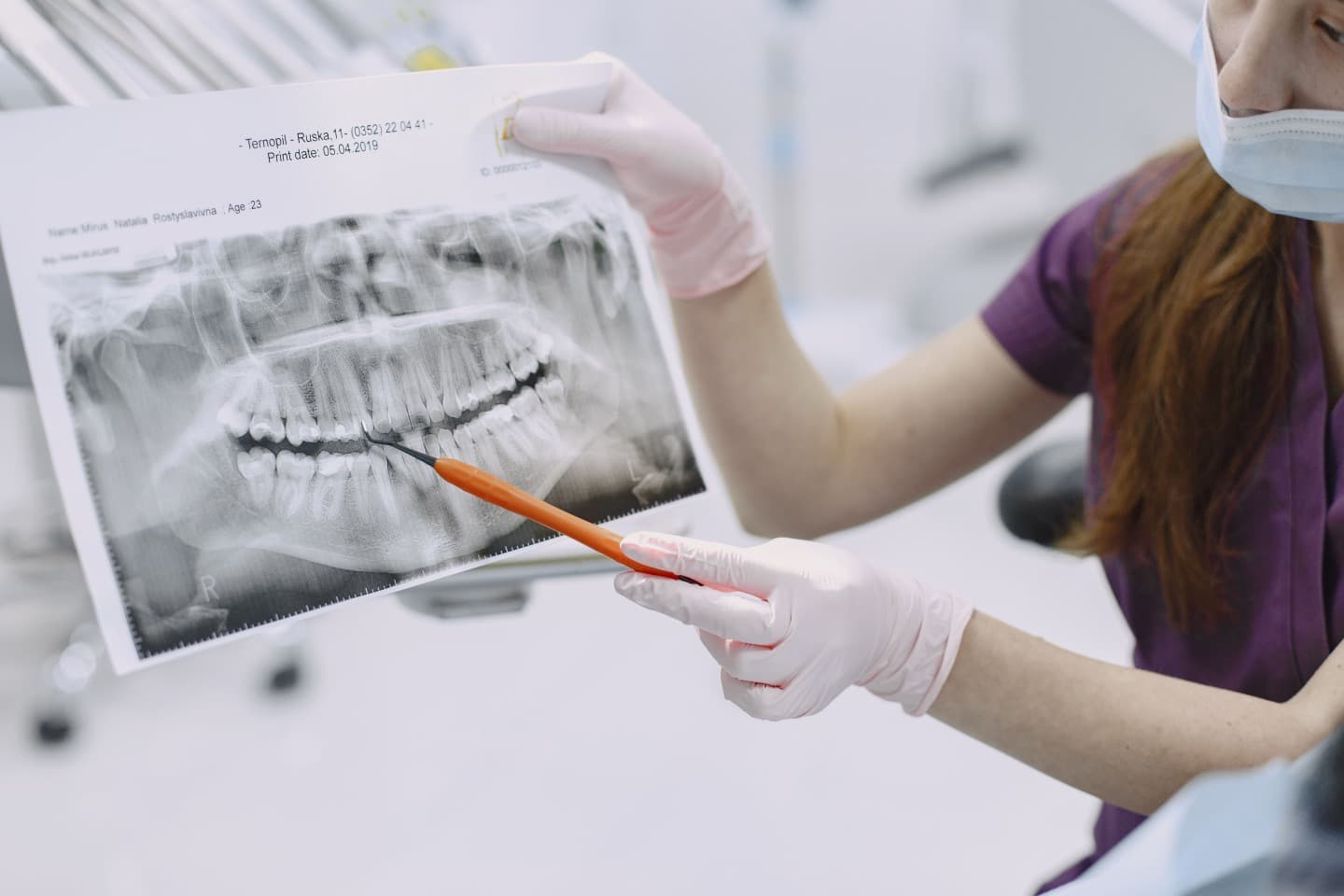
The starting point for any extraction decision is always imaging. A panoramic X-ray, or 3D imaging when needed, shows the tooth's position, root development, and its relationship to the adjacent tooth and nerve — I covered this in more detail in "Why Are Panoramic X-Rays and Intraoral Digital Scans Requested During an Exam?"
After imaging, your dentist evaluates whether the tooth is impacted, which direction it's angled, how close it is to the adjacent tooth, and whether root development is complete. This evaluation is also what reveals whether any of the pathological findings above are actually present.
In some cases — particularly when the root of a lower wisdom tooth appears close to the jaw nerve (the inferior alveolar nerve) — a 2D panoramic image may not provide enough detail. In those cases, 3D imaging (cone-beam CT) is used to clarify the actual distance between the root and the nerve, which makes both the extraction decision and the extraction plan safer.
Does Age Play a Role in the Decision?
When extraction is needed, clinical observation supports the idea that extractions done at a younger age — before root development is complete — tend to be simpler, with more predictable healing, since the tooth is less firmly anchored to the jawbone before its roots fully form. That doesn't mean extraction becomes impossible at an older age; it just means the complexity of the procedure and the healing process can vary from person to person and depend on the tooth's position.
So there's no need to feel anxious about "needing to get this done before a certain age." If there's no pathological finding, age alone isn't a reason for extraction — what actually determines the decision, as always, is the tooth's own condition. The same logic works in reverse: being older doesn't mean extraction can't be done when it's actually needed — it's simply a factor your dentist accounts for in planning.
If You Choose Not to Extract: The Monitoring Process
Choosing to retain an asymptomatic wisdom tooth doesn't mean it's never looked at again. That tooth continues to be assessed at regular dental checkups, with X-rays taken again when needed to monitor for any change in the tooth's position or the surrounding tissue.
If a new symptom appears during monitoring — pain, swelling, recurring infection — or a new finding shows up on X-ray, such as cyst formation, the decision gets reevaluated. In other words, "not extracting" isn't a permanent decision; it's one that's periodically reviewed — which makes monitoring an active strategy, not simply doing nothing.
The Only Reliable Path to the Right Decision: Exam and Imaging
There's no blanket rule on wisdom tooth extraction — not "everyone should" and not "no one should." Even international guidelines don't fully agree on this. But where they do agree is this: the decision should be based on the tooth's actual condition, meaning the concrete findings revealed by an exam and imaging.
If you have one of the pathological findings I've listed above, extraction usually rests on a clear rationale. If you don't, monitoring the tooth for a while longer can also be a reasonable choice. The only reliable way to determine the right approach for your specific situation is through an exam and the necessary imaging.
Frequently Asked Questions
I have no symptoms in my wisdom tooth — should I still get it removed?
No, current guidelines don't recommend removing a problem-free wisdom tooth with no evidence of disease purely as a preventive measure; regular monitoring is also a valid option.
I had pericoronitis — do I need to get it removed right away?
A first, mild episode may not be enough justification on its own; but a recurring or severe episode supports a decision to extract. This distinction requires an exam.
Does an impacted tooth always need to be removed?
No, being impacted isn't a reason for extraction on its own — what actually matters is whether there's evidence of disease.
If I don't get my wisdom teeth removed, will my lower front teeth get crowded?
The one study that directly tested this claim — despite its methodological limitations — found no evidence that extraction prevents this kind of crowding over a 5-year follow-up. If you're concerned about your tooth alignment, that's better evaluated in an orthodontic consultation.
Will I have problems later if I don't get it removed?
This can't be known for certain; the current evidence doesn't offer a clear prediction either way. That's why regular monitoring is recommended.
Does age affect the extraction decision?
Not directly; but extractions done before root development is complete tend to be simpler. If there's no pathological finding, age alone isn't a reason for extraction.
What imaging is needed for the decision?
A panoramic X-ray is usually enough; if the relationship to nearby structures isn't clear, 3D imaging may be requested.
Sources
- NICE (National Institute for Health and Care Excellence) — "Guidance on the Extraction of Wisdom Teeth" (Technology Appraisal Guidance TA1; first published 27 March 2000, reviewed again in 2024)
- Ghaeminia H, Perry J, Nienhuijs ME, et al. — "Surgical removal versus retention for the management of asymptomatic disease-free impacted wisdom teeth" (Cochrane Database of Systematic Reviews, 2020)
- American Association of Oral and Maxillofacial Surgeons (AAOMS) — "The Management of Impacted Third Molar Teeth" (official position paper)